Crown of Thorn removal in Andulay
Two weeks ago, MCP celebrated Earth Day by responding to a joint outbreak of two of the reef’s most persistent coral predators: Crown-of-Thorns starfish (COTS) and Drupella snails. Both are entirely natural, even beneficial, members of a healthy reef community, but when their populations spike well beyond normal levels, they can strip a reef of live coral faster than it can recover.
COTS (Acanthaster planci) are large, multi-armed sea stars covered in venomous spines, found throughout the Indo-Pacific, including reefs across the Philippines. They feed on coral polyps by everting their stomach onto the coral surface and digesting the tissue externally, and a single adult can consume up to 10 m² of coral in a year. At sustainable densities they help control disease by preferentially targeting weak or already-diseased coral, but once numbers exceed roughly 15 individuals per hectare (Moran and De’ath, 1992), a threshold since adopted by the Great Barrier Reef Marine Park Authority, Green Fins, and the Philippines’ DENR, consumption begins to outpace coral growth.
Drupella is a genus of small corallivorous sea snail (family Muricidae) that, unlike COTS, has no single internationally agreed outbreak threshold, reported outbreak densities vary enormously by location and species, from around 2 to well over 100 individuals per square metre. What makes Drupella outbreaks particularly damaging is their taste in coral: they target the same fast-growing branching and table corals, such as Acropora and Montipora, that COTS also prefer, and their feeding wounds can help spread coral disease across a colony. Outbreaks of Drupella have been recorded across the Indo-Pacific since the 1980s, generally linked to the same pressures behind COTS outbreaks: reduced numbers of natural predators, nutrient run-off from coastal development, and warming waters.
Over the prior two weeks, invertebrate surveys at Andulay (a site only ten minutes from MCP base) indicated that both COTS and Drupella populations had reached infestation levels. Normal COTS density is around 15 individuals per hectare, while MCP’s survey teams of volunteer divers found more than 60 individuals in a single 100m by 5m transect, well above the accepted threshold. While it isn’t always possible to pin down a single cause, outbreaks of this kind often follow a decline in natural predators such as Titan Triggerfish and pufferfish, combined with pressures like nutrient run-off and warming waters.

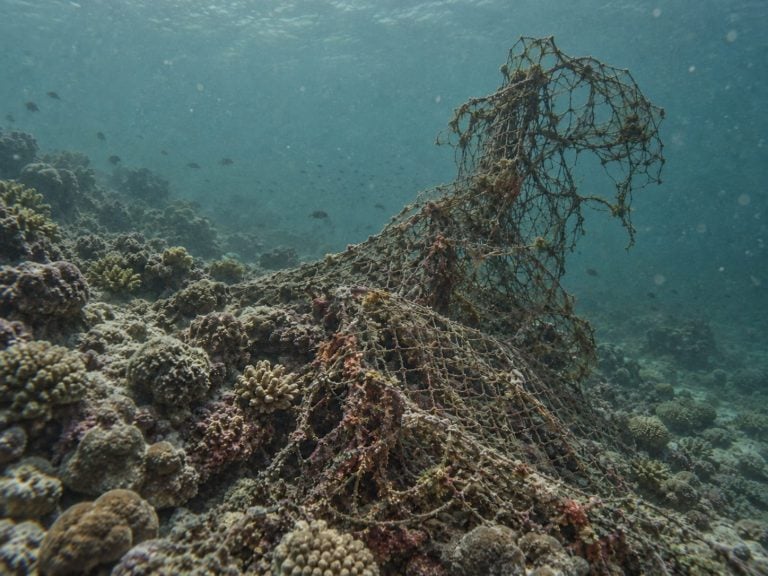
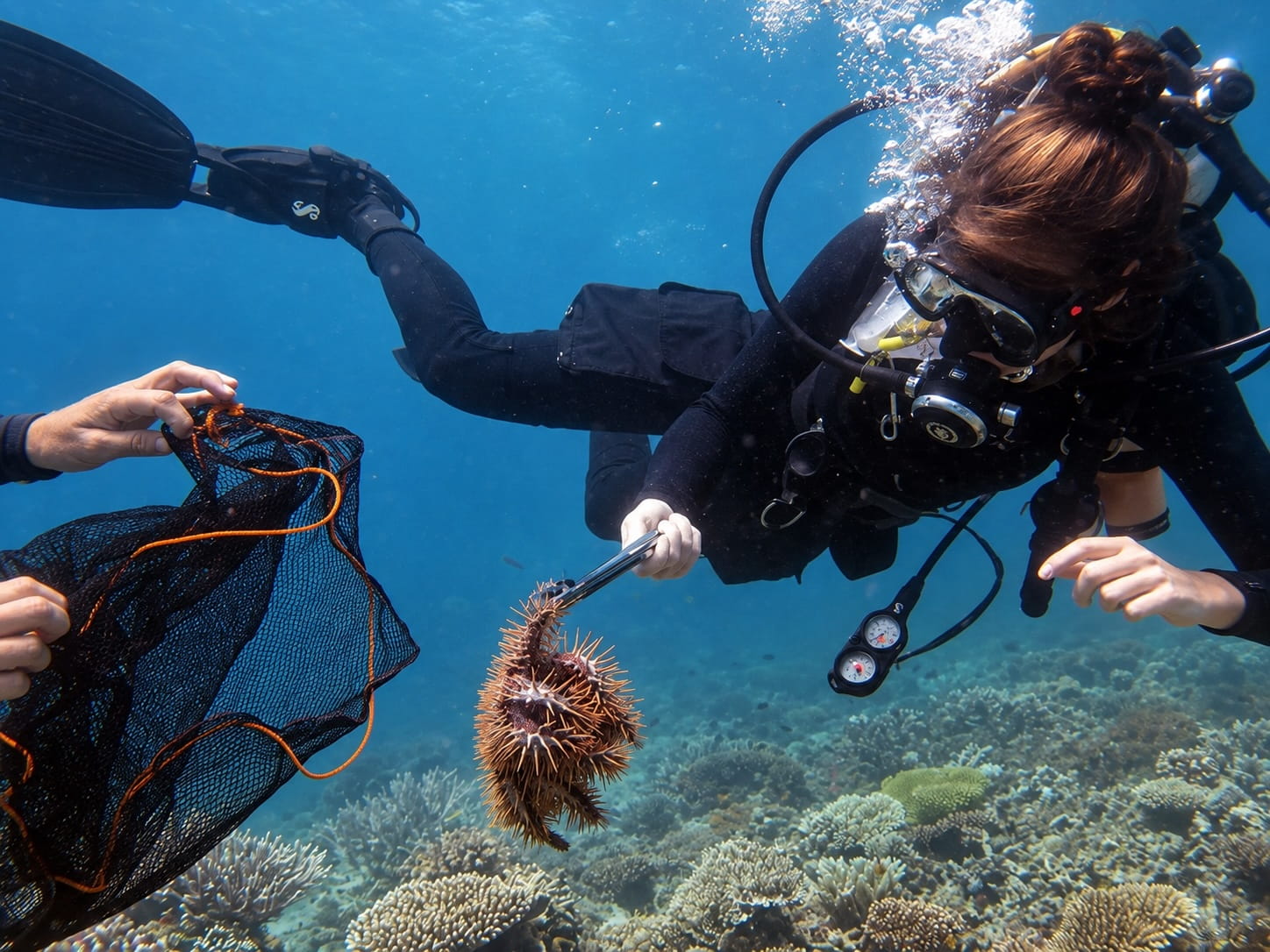
To combat these outbreaks, MCP and the local community came together to remove both species. Local scuba divers, MPA officers, Philippine Navy members, and residents joined MCP’s volunteers at the Andulay MPA’s Bantay Dagat center (a community-based marine patrol post) for a full day of COTS and Drupella removal, the kind of joint effort between conservation staff, local government, and community groups that coastal resource management here depends on. Diving teams covered different depth zones throughout the site to identify and remove COTS. Coral affected by COTS feeding shows a few tell-tale signs: feeding scars along the border of plate corals, strings of tissue and mucus, and scars spreading onto neighbouring colonies. The image on the left shows a branching coral seen during the removal dive with clear feeding scars, patches bleached, browning, and overgrown with algae. Coral in this state was often a useful indicator of where to look, though COTS could also turn up anywhere near coral on the reef.
Once identified, divers used either a vinegar syringe or tongs to remove each animal. Injecting a COTS with vinegar unbalances its internal pH, which it’s unable to regulate, resulting in death. This method is preferred partly because it allows for controlled removal: if a COTS isn’t brought to the surface within about 20 minutes of being disturbed, stress can cause it to release its eggs, which risks making the outbreak worse rather than better.
Invertebrate surveys also found rising numbers of Drupella, with average counts increasing roughly four-fold between the previous monitoring season (November to January) and the current one (February to April). MCP volunteers used tweezers to carefully remove Drupella from affected corals, collecting them in a bag whenever a single coral held more than 50 individuals.
In total, the community and MCP volunteers and staff removed 177 COTS and 699 Drupella in a single day, a strong example of what coordinated, cross-sector conservation action can achieve.
Editor’s note – September 2026
The vinegar-injection method described in this article should not be treated as a current operational protocol. Research published in December 2025 found that 70% of vinegar-treated male crown-of-thorns starfish spawned before dying, compared with 36.4% of males treated with bile salts. No treated females spawned during the study.
Because bile salts killed the starfish more quickly, the researchers recommend using bile salts where they are available, particularly during reproductive periods. COTS control should only be undertaken by appropriately trained and equipped teams, in coordination with the relevant local authorities and in accordance with current local guidance.
Since this was published
This was the first of several COTS responses MCP has carried out at Andulay MPA. Later the same year, a community day at the same site doubled as a further COTS response, and in 2025 a much larger outbreak required an extensive multi-week response.
Further information
For guidance on planning and conducting a responsible response, download the Green Fins Crown-of-Thorns Sea Star Cleanup Guidelines.
The December 2025 research comparing spawning and mortality following vinegar and bile-salt injections is available through James Cook University ResearchOnline.