Government capacity building
We train municipal and DENR teams to monitor and manage their own reefs.
What happens if we disappear tomorrow?
We often ask ourselves this. Over the years, we’ve built up the reef data, survey methods and diving skills needed for good reef management. If all of that stays within one NGO, it lasts only as long as the NGO does.
In the Philippines, each municipality manages its own coastal waters, including its marine protected areas. The people deciding a reef’s future are local government staff, often a small team with plenty of other duties and no dive team of its own.
That makes passing on what we know a large part of our work. We train government divers to the same standard as our own survey teams, then stay on hand until they can work without us. In a sense, we’re working ourselves out of a job, and that’s the point.
From first dive to first survey report
Government divers follow the same path as our own scientific divers, from their first breath underwater to running surveys and reporting the results.
- 1
Open Water Diver
Their first course and, for many, their first time underwater.
- 2
Advanced Open Water
Deeper dives, navigation and more confidence in the water.
- 3Optional
Rescue Diver, equipment servicing and compressor operations
For teams that will dive on their own. They learn to handle problems underwater and care for their own gear. Running a compressor lets them fill their own tanks.
- 4
Survey training
The same methods our own survey teams use, both inside and outside the MPAs.
- 5
Data and reporting
Entering and checking data, interpreting the results and writing them up, so municipalities can follow their own reefs over time and back their decisions with evidence.
Our open survey data
Who we train
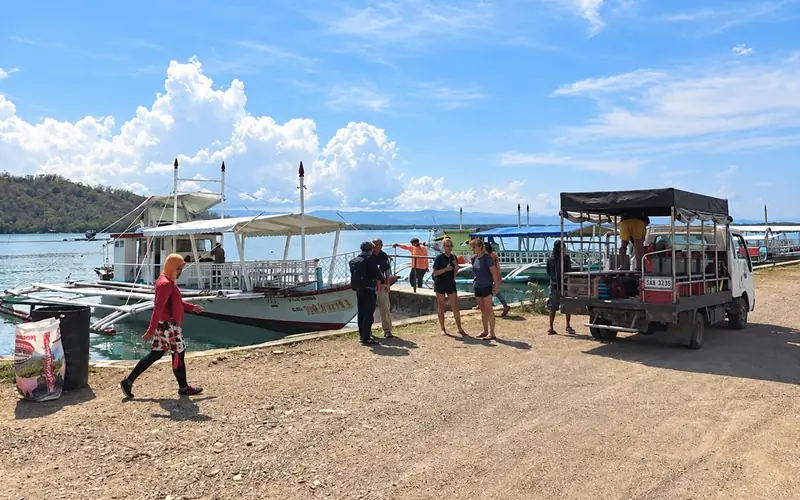
Municipal dive teams
Dive teams from local governments in our own survey area, Zamboanguita, Siaton and Santa Catalina, as well as the nine municipalities in the BATASS and BATMAN alliances.
Meet the alliances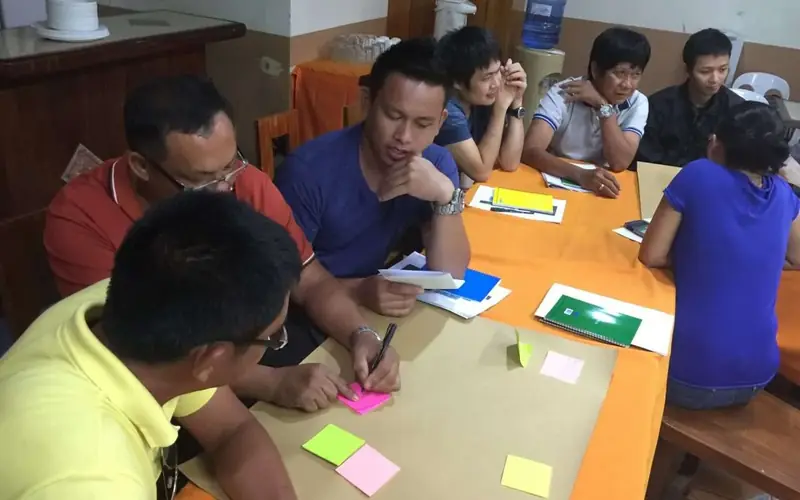
DENR staff
Under an agreement with the Department of Environment and Natural Resources, we support its Coastal and Marine Ecosystem Management Program (CMEMP), a national programme to build local capacity for managing coastal and marine resources. We train DENR staff in reef survey methods and give technical help where it’s needed.
Read about our DENR training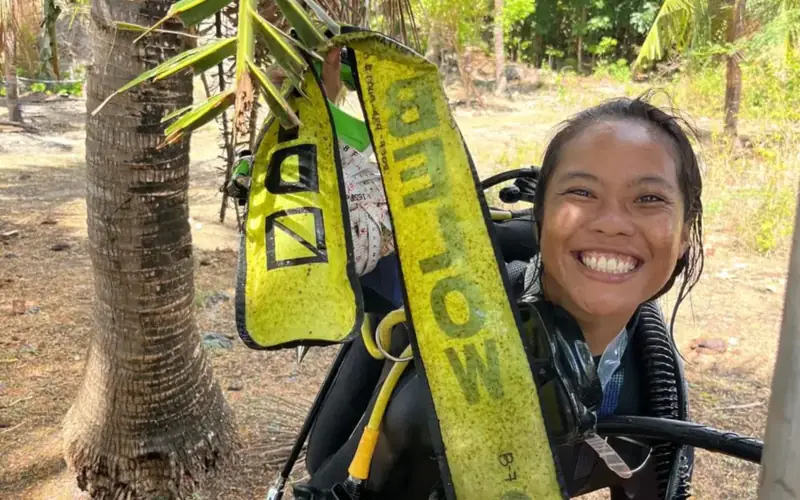
Filipino scholars
Our scholarship programme takes young Filipinos from Open Water to Divemaster, with MCP covering all fees and costs. This builds capacity in another way, by training the next generation of Filipino conservation divers.
About the scholarshipAfter the training
Trained teams do more than survey. In the BATASS alliance, municipal dive teams now work with us on ghost net removal, marking MPA boundaries and underwater clean-ups. Their data also feeds into decisions about their own protected areas.
Quote text
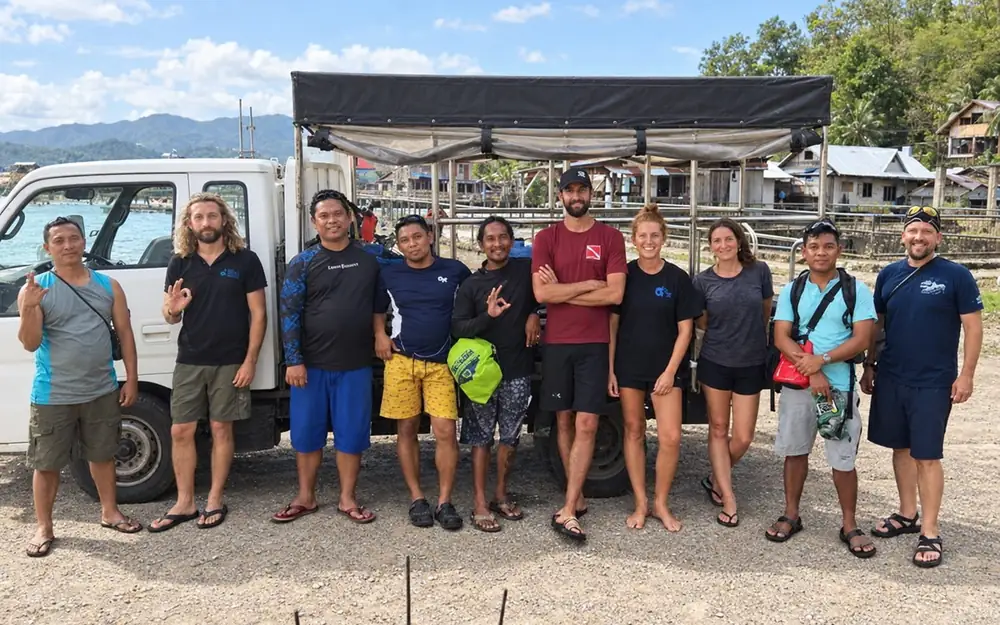
Divemaster trainees lend a hand
Helping instructors teach is part of becoming a PADI Divemaster. Now and then, a few of our divemaster trainees get to do that on a government training course, sometimes during a team’s first dives on its home reef. For them, it’s teaching practice that counts twice: for their own training, and for reefs that will be looked after long after they’ve gone home.
Become a Divemaster with usWork with us
Does your municipality or organisation need help with reef monitoring or diver training? Get in touch and we’ll talk through what you need.
You can also support the work by donating or becoming a corporate partner.