DENR training: What Happens If We Disappear Tomorrow
Six weeks ago, a small team of DENR staff could barely tell a nudibranch from a piece of rubble. Now they can survey a reef with the kind of precision it takes our own team months to build. That’s what sustainability actually looks like: not a buzzword, but a skill that outlives the people who taught it.
The real test of conservation work isn’t what happens while you’re there. It’s what happens if you disappear.
Here at Marine Conservation Philippines, that’s what sustainability means. It means making sure communities have plentiful, well-maintained natural resources they can rely on for the long term. But more than that, sustainability is a legacy: making sure that actions to safeguard nature and communities continue for the long term, regardless of what happens to MCP.
That’s not exactly the best business model, essentially working ourselves out of a job. But local people and government staying dependent on us would be pretty much the opposite of a lasting impact.
So, for all the ups and downs, and all the challenges, alongside those moments where you have to fight off grinning like an idiot, we’re working toward that goal: making sure that whatever happens to MCP, this province has the skills to maintain and monitor the coastal environment, by training government partners to do everything we’ve achieved over the past two and a half years.
This is part of the bigger picture we have at MCP. That picture is this: we can achieve a lot with the remarkable people who join us as volunteers and interns, but we’re not everywhere, and we don’t have infinite resources. To make sure what we’re achieving can both continue without us and spread across the country, we need to take our successes, package them up, and train local people to recreate them. And who better to train than the Department of Environment and Natural Resources?
This training sits under the DENR’s Coastal and Marine Ecosystem Management Program (CMEMP), a ten-year, science-based national programme launched to build up local capacity for managing the country’s coastal and marine resources. For us, that’s what makes this partnership worth the effort: instead of the skills we teach staying inside MCP, they become part of a nationwide system for managing MPAs and monitoring reef health, long after any one training ends.
The DENR is a department responsible for monitoring what seems to be every kind of ecosystem that exists on the island, seriously, everything, even caves. They do it surprisingly well too, given that even they don’t have all the resources they need, and the small team responsible for monitoring everything has taught itself what to look for and how to monitor it.
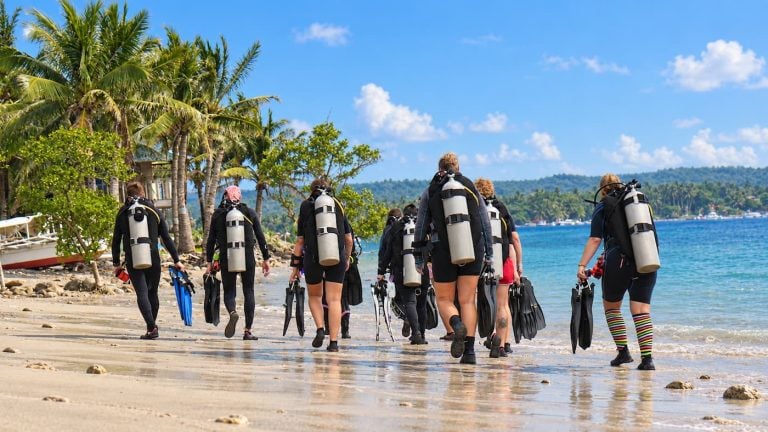
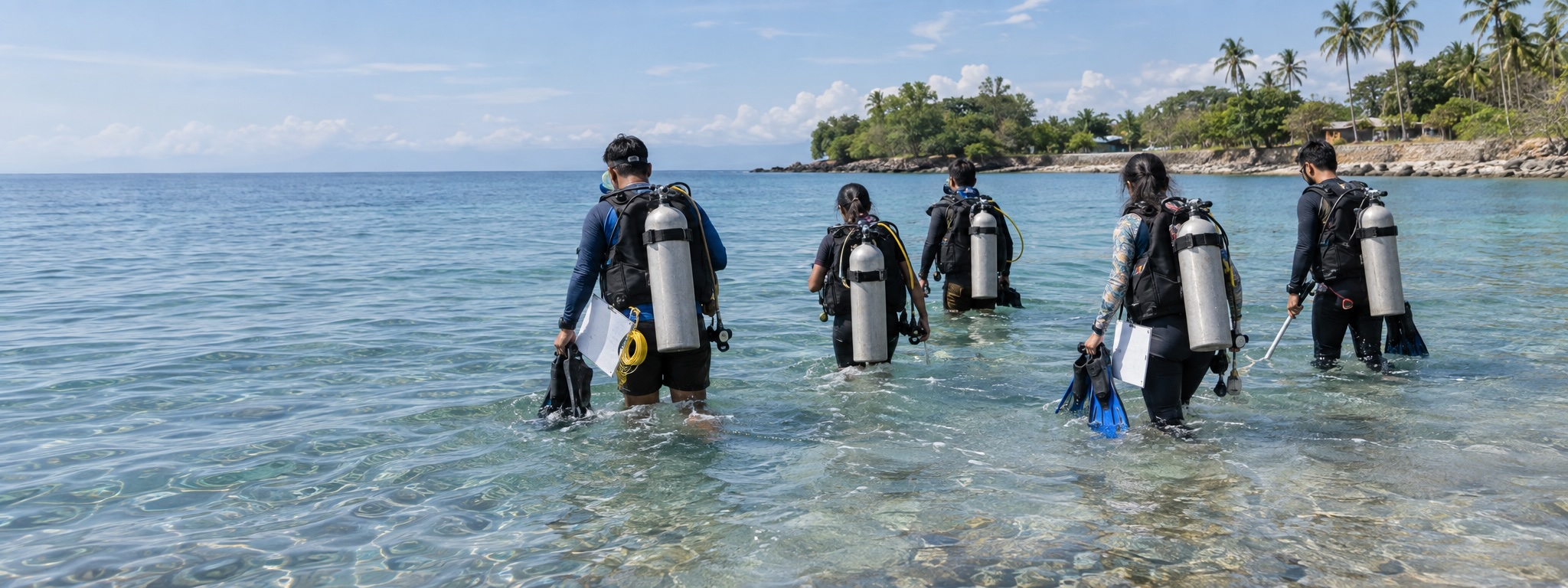
Going straight from a PADI Open Water/Advanced course to surveying cryptic invertebrates is not an easy task. Cryptic invertebrates are the small, camouflaged crabs, shrimps, worms and molluscs that live tucked into reef crevices rather than out in the open, notoriously difficult to spot, let alone identify, but useful as an early warning sign of a reef’s health, since they often respond to environmental change well before the more visible fish and coral do. It’s something we spend weeks of intensive training on with our volunteers and interns. Doing it without any expert advice is incredibly difficult, and yet to some extent, that’s what the five people we’ve mostly been working with have done.
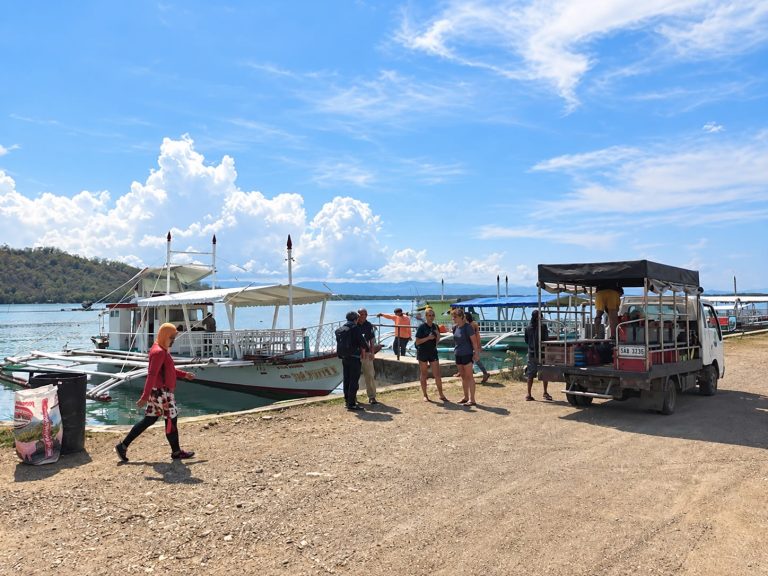
That’s not to say there haven’t been challenges. There have been moments where we assumed too much, and equally where we assumed too little; frustrating moments where we didn’t really know what was happening at all; weights dropped on heads, missing equipment, four vehicle breakdowns, drowned electronics, and a frankly outrageous amount of snacks.
But here we are, approximately six weeks after the first round of training, in which we looked out at some slightly confused and worried faces, largely down to my penchant for too much information. The change since then has been remarkable. We started with a team that had some skill at recognising what they saw and how to record it, but perhaps didn’t fully understand the finer points of surveying, or the dive skills and organisation behind it. What we have now is a team with military precision, on island time.
A team like that is great for us to see, but it means more than just how happy it makes us. That team is now more than capable of surveying the province, including all existing marine protected areas and those still to be established. That team is the embodiment of what we can achieve throughout the country, and with a bit more practice, we’ll get better at delivering this kind of training along the way.
The bigger picture: if we were to disappear tomorrow, it would be a real loss, but we’d know that local team, and the people they go on to train to be just as skilled, will still be there, and the marine environment will still have skilled people looking after it. Actually, it’s better than that. There are skilled people, from the area, who have memories of this environment and are emotionally invested in it, looking after their own home.