The changing ocean
Climate and coasts
Three free lessons for ages 13 to 18
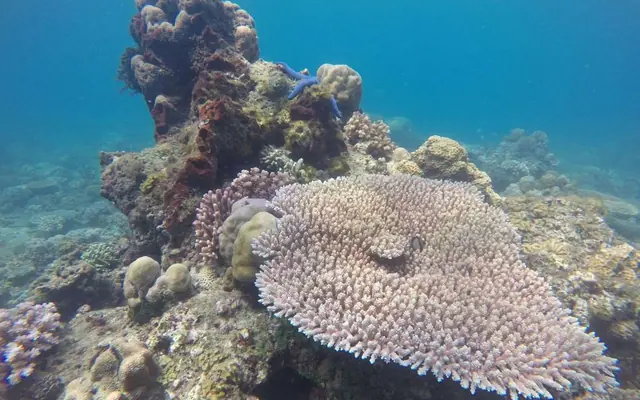
The ocean has absorbed over 90% of the extra heat trapped by greenhouse gases. Students model warming and acidification with simple experiments, calculate coral heat stress the way NOAA does, and debate what 1.5 °C versus 2 °C means for reefs.
- Ages
- 13 to 18
- Time
- About an hour per lesson
- Subjects
- Science, maths and geography
- Hands-on
- Two experiments, a degree heating weeks calculation and a structured debate
-
Lesson 1: A warming ocean
How the ocean absorbs heat, a sand and water experiment, and calculating coral heat stress with degree heating weeks.
- Ages
- 13 to 18 (grades 8 to 12)
- Time
- 60 to 75 minutes
- You need
- Per group two cups, sand, water, two thermometers and a lamp, plus one DHW worksheet per student
-
Lesson 2: An acidifying ocean
How carbon dioxide acidifies seawater, two simple experiments, and what it means for shells and corals.
- Ages
- 13 to 18 (grades 8 to 12)
- Time
- 60 minutes, plus a 24-hour wait for experiment 2
- You need
- Per group: red cabbage indicator or universal indicator, cups, straws, eggshell or chalk, water, soda water, vinegar, a balance
-
Lesson 3: Bleaching, change and hope
Global bleaching data, future projections, what helps reefs, and a structured debate.
- Ages
- 13 to 18 (grades 8 to 12)
- Time
- 60 minutes
- You need
- One debate planner per pair
Get new lessons by email
We add lessons every term. Join our newsletter to hear about them first, or browse all our free lessons.
Bring your students to the reef
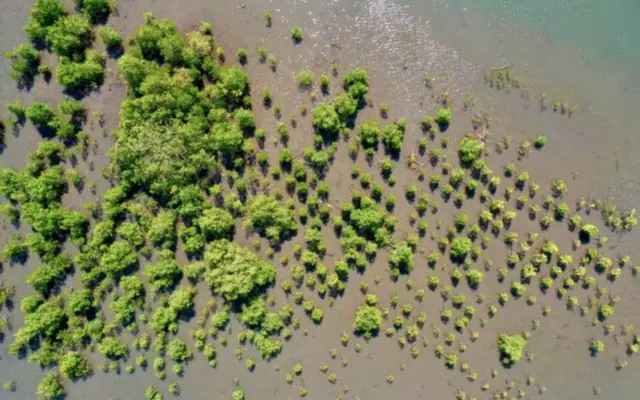
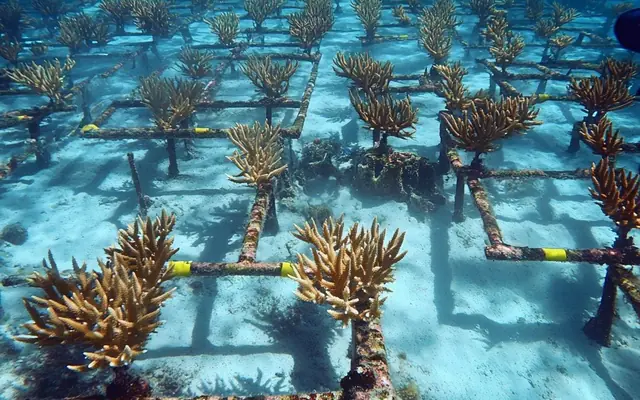
We host school groups at our base in Zamboanguita, Negros Oriental, for diving or snorkelling, beach clean-ups and tree planting alongside our conservation team. Every visit follows our child protection policy.