The benefit of Marine Protected Areas
Editor’s note — July 2026
The Philippines now has more than 1,800 MPAs, 200 more than when this article was first published. In our own municipality of Zamboanguita, four more MPAs have since been established: Guinsuan, Latason, and Malatapay, all implemented in 2022, and Mojon, which followed two years later. This gives us a valuable insight for our monitoring reports, since we hold data from before these sites were protected, allowing us to compare how an area changes before and after MPA status.
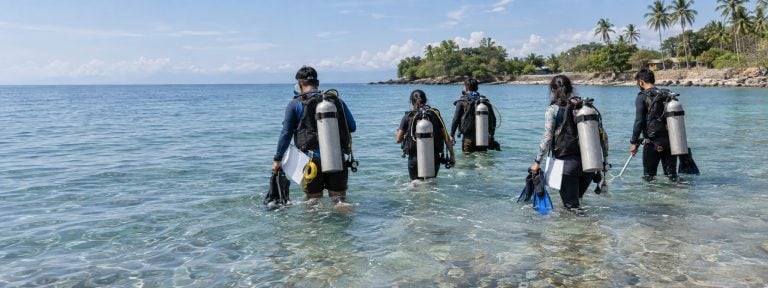
We have also continued training local staff from the municipalities in scuba diving, and have expanded this work to local government units in northern Negros Oriental through the BATaSS Alliance (Bais, Amlan, Tanjay, San Jose, and Sibulan). Although the MPAs in these municipalities are not currently part of MCP’s own monitoring sites, we hope that through this training and other support, the LGUs will eventually be able to monitor the biodiversity of the areas they are protecting themselves.
In 2026 the US administration moved to reopen some Pacific MPAs, including Papahānaumokuākea, to commercial fishing. This is currently being legally contested. Likewise in the Philippines, while total number of MPAs have increased, there has sadly also been a rise in “paper parks,” MPAs that exist on paper but are not properly established or enforced. Through our continuous monitoring and local capacity building, we aim to ensure that MPAs do not simply exist on paper, but that real action is taken towards their effectiveness, so their communities can genuinely benefit.
Marine Protected Areas (MPAs) have been popping up all over the world, with new designations regularly competing for the title of biggest MPA on the planet. Two of the most significant to be established in recent years are the Ross Sea Marine Protected Area in the Southern Ocean off Antarctica, and the Papahānaumokuākea Marine National Monument in Hawaii. Marine protection has continued to expand since then: today close to 10% of the global ocean is designated within some form of protected area, though only around 3% of that is fully or highly protected, meaning genuinely free of damaging activities like fishing and trawling. The original global target of protecting 10% of coastal and marine areas by 2020 has since been replaced by a more ambitious one, the “30×30” goal adopted under the Kunming-Montreal Global Biodiversity Framework in 2022, which commits nations to protecting 30% of the world’s land and ocean by 2030. We still have a long way to go, but progress is being made.
Papahānaumokuākea Marine National Monument in Hawaii covers 1.5 million square kilometres. For years it was the largest Marine Protected Area in the world, though it has since been surpassed by French Polynesia’s Tainui Atea MPA, which covers 4.5 million square kilometres. Papahānaumokuākea is one of the few MPAs that is fully a no-take zone, protecting resident humpback whales, the endangered Hawaiian monk seal, and around 7,000 other species. The Ross Sea Marine Protected Area covers 1.1 million square kilometres, sits in international waters, and took five years of negotiation to establish. It carries the unusual condition that its protections expire after 35 years.
Within an MPA, or more precisely within a Marine Reserve, there are usually different zones where different activities are allowed. The no-take zone, where no fishing is permitted at all, is the most important, because it gives fish the chance to grow, mature, and reproduce without interference. Over time, both biomass and diversity increase, not just of fish but of invertebrates and coral too. Most MPAs are created to protect either a habitat or an endangered population of a specific species.
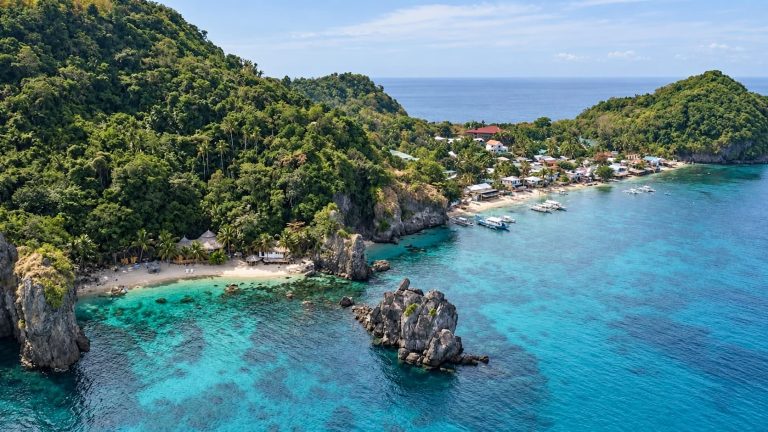
MPA-wise, the Philippines is a special country, with a staggering number of Marine Protected Areas [confirm figure: 1,600 as originally published, see 2026 update below for current total]. That sounds like a lot, but most MPAs are very small, often about a hectare. That’s largely because neighbourhoods, or barangays, are responsible for their own section of municipal waters, and the border of the MPA is usually the border of the barangay. Creating an MPA is a first step, but it counts for little if it isn’t properly enforced and managed.
Enforcement of MPAs is easier said than done, especially for larger ones. In the Philippines it’s often enough to have the Bantay Dagat, literally “sea watchers,” enforcing an MPA: usually a team of two people patrolling the beach around the clock. In MPAs covering hundreds of square kilometres, you need additional help such as satellite or aerial surveillance to flag when a boat enters, plus a fast response team, which is much harder to organise.
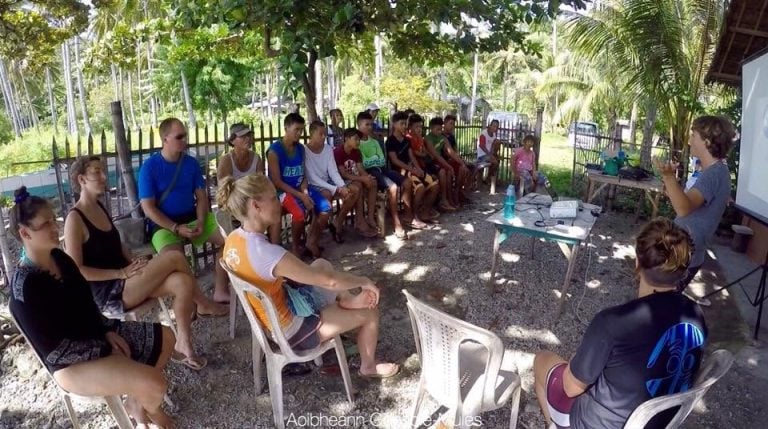
As we see firsthand at Marine Conservation Philippines, even enforcing small-scale MPAs is a challenge. When this article was first published in 2016, Zamboanguita had just three MPAs, the salary for enforcers was low and the hours long. Additionally the municipality’s patrol boat was often out of order, making it harder yet to apprehend illegal fishing boats. None the less, we have a lot of respect for the enforcers who take on the job, and we do what we can to help: assisting with demarcation of the MPAs, regular beach and dive clean-ups, augmenting salaries through a signed agreement with the municipality, and teaching enforcers how to scuba dive. Their job is a little easier than in many other countries, because the locals living in the barangays are often the ones who proposed the MPAs in the first place, and don’t mind giving up their fishing grounds because they recognise the long-term benefit to fish stocks. This is the so-called “spillover effect,” where areas adjacent to an MPA also benefit, because both fish and larvae move past its borders. Whether you look at it from an ecological or an economic perspective, the result is the same: an increase in biomass and diversity, which is exactly why this principle works so well in the Philippines. It benefits a lot of people.