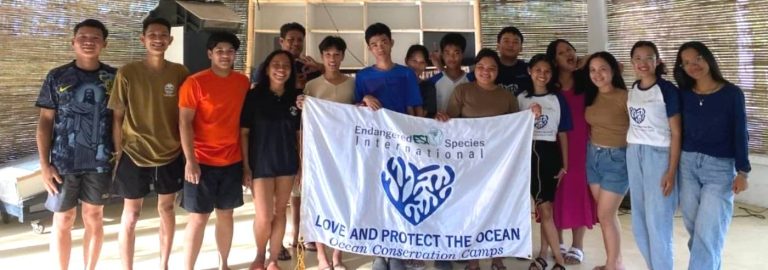
Environmental education at local schools
As part of our conservation efforts at MCP we are committed to working with young people to develop an awareness and appreciation for our amazing oceans. In a world where environmental concerns are becoming all the more pressing, our goal is to help students develop the understanding, skills and ability to make a difference.
To do this, we have a broad educational program which includes our Youth Education project, our Environmental Club and our hosting of schools from different countries. In this post, however, we want to shout about our newest development.
Claire Drucquer, a teacher from the UK, has spent the last two months designing a marine conservation curriculum that can be delivered by future volunteers in local schools. It consists of 11 lessons covering the topics of coral reefs, sharks and plastic pollution.
In this time she has been delivering the lessons to students at Zamboanguita Science High School and at the Little Children of the Philippines (LCP) in Dumaguete. Knowing that students learn through fun and engagement, we’ve filled the lessons with games, quizzes, videos, experiments and demonstrations that have engaged the students in new and exciting ways. Some highlights have been students making, and eating, their own coral polyps out of bananas and biscuits in the “Amazing Polyps” lesson, a shark myth-busting session drawn from “Humans and Sharks”, creating a whole mural in the girls’ dormitory at LCP, and taking a class of 30 students on a virtual, underwater dive.
“The time in the school has been an absolute privilege,” says Claire. “The students have been so receptive to new ideas and creative in coming up with their own solutions. Every day we are welcomed by 30 students who want to learn, and we leave having had thoughtful discussions, tons of lightbulb moments, surprises from students and lots of laughs.”
Perhaps most importantly, we have aspired to make our lessons relevant to students’ own lives. Taking into account their experiences of the ocean and using these as starting points for developing a deeper understanding is at the heart of what we’re trying to do. Using examples of local reefs such as Apo Island, incorporating the work of MCP and responding to what students say they want to learn has made our curriculum unique, and we like to think, more useful to students and teachers.
So we now have a full curriculum with background reading, lesson plans and resources for the lessons, alongside “Marine Life Stratego“, a live-action version of the classic board game built for groups of 15 to 60 students. What makes us happiest is being able to share what we’ve done. Teachers have requested our lessons to use in their schools, and for us, this is the biggest success. If you are a teacher, or know one, please check out the cool downloads under teacher’s resources.
Editor’s note — September 2026
This curriculum is no longer delivered by volunteers. Since this post was written, we’ve moved toward staffing our education program with local, full-time teachers rather than relying on international volunteers, who are often enthusiastic but not trained educators. It’s part of a broader shift at MCP toward creating local, professional roles rather than filling them with rotating volunteer labor.
Claire Drucquer, who built this curriculum during her time as an MCP intern, is no longer with the organisation, but her lessons are still in daily use. The resources on this page have been downloaded hundreds of times by educators around the world, far more than we can trace back to individual schools or classrooms. If you’re using them, we’d love to hear from you.