Skip to content
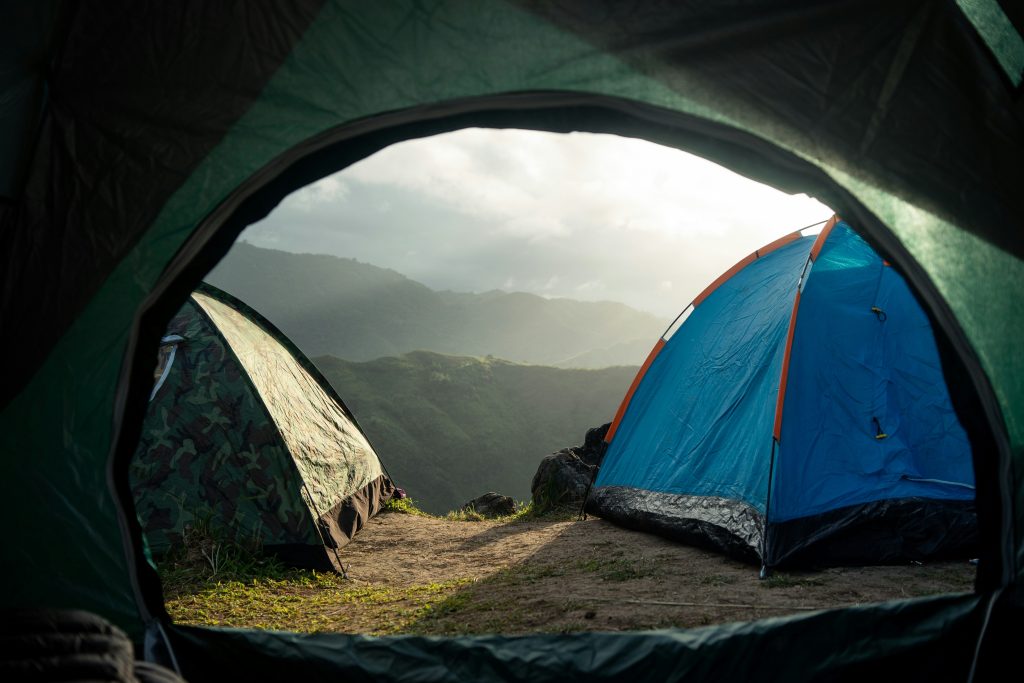
View from inside a tent of two more tents pitched on a mountain ridge, with forested hills in the morning light

Day trips and days off

Diving six days a week is wonderful, but it’s tiring too. Sundays are always yours, and if you’d like an extra day off for a trip, just let us know.

Some volunteers head for waterfalls and hot springs, some take a ferry to another island, and some get no further than a hammock and a book. All of it is time well spent.

The bus to Dumaguete stops right at our gate about every 15 minutes, making most places on this page easy to reach.

Close to base

Malatapay Market (Wednesdays only)

Every Wednesday, a quiet road in Zamboanguita becomes one of the province’s busiest markets. Farmers and fishermen sell fresh produce and fish, while vendors offer everything from plastic buckets to children’s clothes. In the field behind the market, cattle, carabao, goats and pigs are bought and sold. Buyers travel from across Negros and even Cebu, with prices often settled in a whispered auction known locally as hong-hong.

Stalls go up before dawn and most trading happens in the morning, so arrive early and stay for the lechon (spit-roasted pig). As the market falls midweek, you’ll need to ask for a day off. Boats for Apo Island also leave from Malatapay.

Dauin

Dauin, the next town north, has some lovely restaurants and spas, and it’s a favourite with volunteers on Sundays. Bongo Bongo Divers, also in Dauin, gives our volunteers a discount on dive gear. In the town centre, the San Nicolas church is the oldest in the province. Up in the hills, Barangay Baslay has a sulphur hot spring and a coffee plantation where you can take a guided walk, and Malmag Falls is a short trip from town.

Lake Balanan, Siaton

In the hills of Siaton, south of us, Lake Balanan formed about a century ago, when an earthquake brought down the hillsides and dammed the Balanan River. A path of about four kilometres circles the lake through the forest, passing waterfalls on the far side. If you don’t fancy walking all the way round, you can cross by boat. With a restaurant by the water, it’s an easy place for a quiet day out.

Into the hills

Behind Dumaguete, the ground rises towards Cuernos de Negros, the volcanic range whose twin peaks stand behind the coast. Up here, it’s cooler and greener, and the same underground heat that warms the hot springs also feeds the geothermal power plant in Valencia.

Valencia

Valencia, a short ride inland from Dumaguete, packs a full day into a small area.

  • Casaroro Falls drops about 30 metres into a forested gorge. Reaching it involves some 335 steps and a short scramble along the river. Wear good shoes, as the steps can be mossy.
  • Pulangbato Falls owes its red rocks to sulphur from the hot springs nearby.
  • Red Rock Hot Spring, next door, has pools naturally warmed to around 38 °C.
  • Forest Camp has cool, spring-fed pools set among the trees.
  • Tierra Alta, on the way back down, has views over Dumaguete and the Tañon Strait.

Many volunteers hire a habal-habal, a local motorbike taxi, for the day in Valencia, agreeing the route and price before setting off.

Twin Lakes (Balinsasayao and Danao)

Two crater lakes sit side by side in Balinsasayao Twin Lakes Natural Park, in the hills above Sibulan, just north of Dumaguete. The park is a protected forest of about 8,000 hectares, where more than a hundred bird species have been recorded, so bring binoculars if you have them. You can hire a kayak on Lake Balinsasayao, take a boat across and walk on to Lake Danao, or climb to the viewpoint overlooking both lakes. Pack a layer, as it’s noticeably cooler up here. The park is open daily from 8 am to 5 pm.

Mount Talinis

At around 1,900 metres, Talinis is the highest point of Cuernos de Negros and one of the province’s toughest climbs. Trails run through mossy forest and past sulphur vents and crater lakes, with most people taking two days and camping at Lake Nailig.

Valencia closed the trails on its side in late 2025 to give the mountain time to recover, so check with us on the current status before making plans. Climbs need a registered local guide and a permit from the municipal tourism office. Because of the altitude, plan the climb as you would a flight, with no diving the day before.

Further afield

A jeepney and a tricycle on a tree-lined street in Dumaguete

Dumaguete

Shops, cafés, a cinema and a good night out: Dumaguete has all of it, with the relaxed feel of a university town. Our Dumaguete page explains what’s where and how to get there.

Dive boats moored off the village beach on Apo Island

Apo Island

About once a month, we take every volunteer to Apo Island for a day of fun diving. If you’d like to return on your own, boats leave from Malatapay, and the trail to the lighthouse is worth the climb. Read more on our Apo Island page.

Turquoise water and forested limestone cliffs along the coast of Siquijor

Siquijor

The fast craft from Dumaguete to Siquijor takes 40 to 50 minutes. The island has waterfalls, quiet beaches and a long tradition of folk healing. It works as a day trip, and even better overnight if you add an extra day off to your Sunday. See our Siquijor page.

Bais and Manjuyod

Boats leave Bais, about an hour north of Dumaguete, early in the morning to look for dolphins in the Tañon Strait. The strait is the largest marine protected area in the Philippines, home to at least 14 species of whales and dolphins. Most trips also stop at the Manjuyod sandbar, a long strip of white sand best seen at low tide, while some pass through the 400-hectare Talabong mangrove forest. Choose an operator whose boats keep their distance and let the dolphins approach.

This coast is close to our hearts. We once ran reef surveys at Talabong, and today we’re the technical support partner for marine conservation in the two municipal alliances that Bais City and Manjuyod belong to. Early departures make it a long day from base, so consider spending the night before in Dumaguete.

Whale sharks: please skip Oslob

Day tours across the strait to Oslob in Cebu are sold throughout Dumaguete. We strongly discourage them.

At Oslob, whale sharks are fed every day to guarantee tourists an encounter, and that feeding changes the sharks’ behaviour:

  • Sharks that would normally travel along the coast stay for weeks or months at a time.
  • They lose their natural caution around boats and people.
  • Researchers found them working twice as hard as usual, manoeuvring around boats and one another.
  • Despite the rules, in-water surveys found swimmers within two metres of a shark almost every time.

There are far better ways to meet a whale shark. In Southern Leyte’s Sogod Bay and in Donsol, wild whale sharks come to feed in season, roughly November to May, and local communities run snorkelling trips with strict rules on distance and group size. Our guide to diving in the Philippines covers both: Sogod Bay in Southern Leyte and Donsol, near Ticao Pass.

Good to know

  • Getting around

    Take the bus from our gate to Dumaguete, where jeepneys, tricycles and onward buses reach almost everywhere. For the hills, a habal-habal is the local way up. Our Dumaguete page has the details.

  • Bring cash

    Entrance fees are small and payable in cash only. ATMs in Zamboanguita and Dauin are often empty, so withdraw cash in Dumaguete.

  • Ask us

    Our staff know the area well and can advise on what’s open, how long things take and how to get there.

Want to volunteer with us?

Spend your weeks surveying the reefs of southern Negros with our team, and your days off exploring places like these.

Read about volunteering