Recovering from the typhoon Haiyan
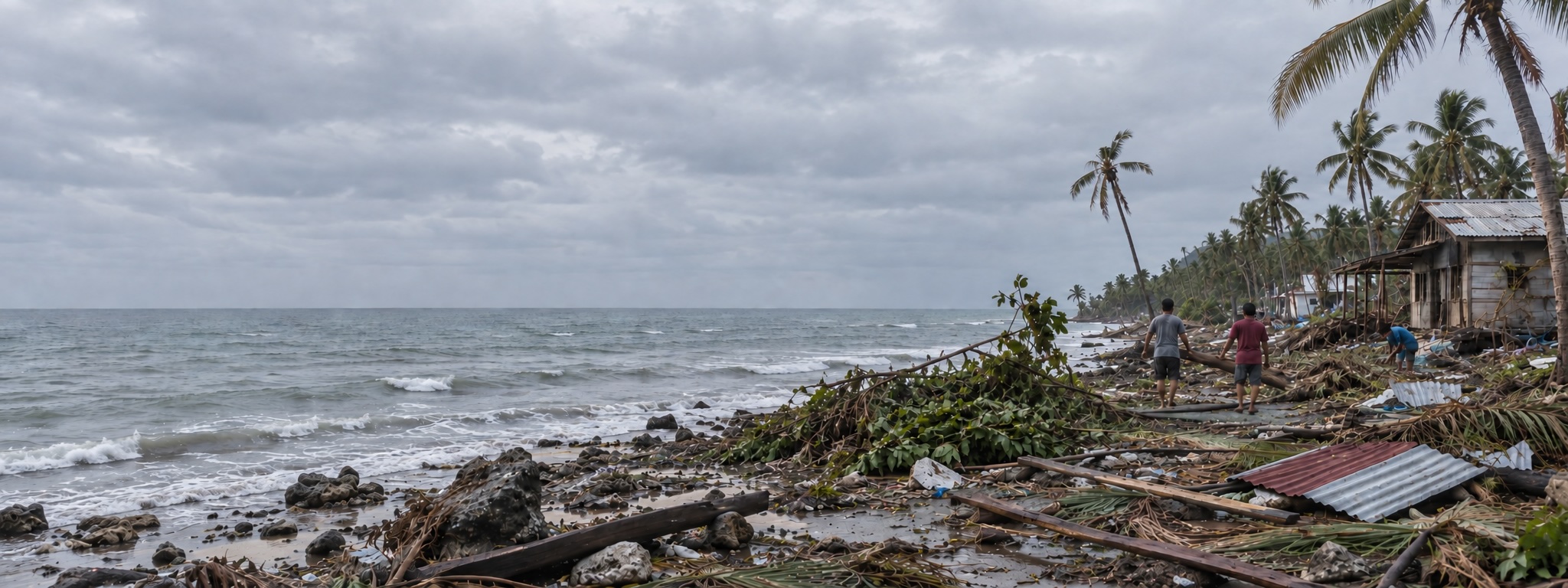
At the moment of writing, the international media is awash with images of the carnage wrought on the Philippines by hurricane Yolanda (Haiyan.) While many areas have escaped relatively unharmed, the haunting images of the destruction of Tacloban is a poignant reminder how strong these destructive forced can be. At Marine Conservation Philippines we send our best wishes to friends and loved ones throughout the Philippines, all of whom thankfully are physically unhurt, but many of whom sadly lost property and livelihood.
While the damage wrought on property and land is immense, time will tell how the hurricane affected the coral reefs. As the visibility clears up after the storm, scuba divers can start surveying the damage. Locally we’re thankful, that it was high-tide as Yolanda struck Siquijor, Apo Island and Negros Oriental. The extra feet of water will presumably, to an extent, have acted as a buffer lessening the damage. Certainly, the first few dives are going to be exiting.
This is neither the time or place to speculate about a correlation between extreme weather and global warming – that time will no doubt come in the month to come, as evidenced all over the scientific blogosphere. Now instead it’s a time to bury the dead. The Philippine nation is no stranger to hard times and once the dead are buried, the buzz and roar of chainsaws and bulldozers will be the sound score of the immense salvage and clean up work ahead. As always, the Philippines will do, what it does best. Get back on its feet.
Editor’s note (2026): Looking back, this post was written as the news was still breaking, and it shows. What we can add now is some hindsight.
Haiyan’s track, it turns out, passed well to the north of us – through Samar, Leyte, northern Cebu and Panay – rather than over Negros Oriental itself, which is likely a large part of why we escaped as lightly as the post describes. MCP wasn’t yet operational at the time; we were still building the website, making connections and exploring partnerships that would come together later. So there’s no MCP dive data from those weeks to add here – the “time will tell” in the original post never got a formal answer.
Eight years later, we weren’t so fortunate. Super Typhoon Rai (Odette) made landfall directly through Negros Oriental on 16 December 2021, one of nine landfalls it made across the country. Bais City and Manjuyod, both in our home province, were among the hardest-hit areas, and Siquijor alone had over 4,400 homes damaged. This time, it wasn’t a near miss.
By then, MCP was in a position to respond. We ran a fundraiser and distributed roughly 12,000 meals to communities across the central Visayas in Odette’s aftermath:
The two storms, eight years apart, are also a reminder of why the reef and MPA work we do matters beyond the reef itself: research since Haiyan has consistently found that reefs with intact structure and healthy fish populations recover from storm damage faster than degraded ones, and storms in the Philippines aren’t getting any less frequent. Coastal resilience and reef health turn out to be the same project.
You can find more of our fieldwork on film on our films page.