Reef scientists
Science skills
Three free lessons for ages 13 to 18
The methods our survey divers use, adapted for the classroom. Students compare random and stratified sampling, measure coral cover from quadrat photos, and count fish along a belt transect before calculating density and diversity.
- Ages
- 13 to 18
- Time
- About an hour per lesson
- Subjects
- Biology, maths and statistics
- Hands-on
- A sampling challenge, photo quadrats and a belt transect count
-
Lesson 1: Why scientists sample
Estimate a population with random and stratified sampling on a practice reef, the way survey divers do.
- Ages
- 13 to 18 (grades 8 to 12)
- Time
- 60 minutes
- You need
- One practice reef map and one record sheet per group, calculators
-
Lesson 2: Measuring coral cover
Measure percent cover with the point count method on practice photo-quadrats, compare two sites, then try a schoolyard transect.
- Ages
- 13 to 18 (grades 8 to 12)
- Time
- 60 minutes, plus 20 minutes outside if you run the schoolyard transect
- You need
- One photo-quadrat worksheet per student, a 10 m tape for the schoolyard transect
-
Lesson 3: Counting fish and measuring diversity
Count fish on practice belt transects, calculate density and Simpson's diversity index, then plan a real field survey.
- Ages
- 13 to 18 (grades 8 to 12)
- Time
- 60 minutes
- You need
- One fish belt worksheet (A4 landscape, colour) and one survey planner per pair, calculators
You might also like
Get new lessons by email
We add lessons every term. Join our newsletter to hear about them first, or browse all our free lessons.
Bring your students to the reef
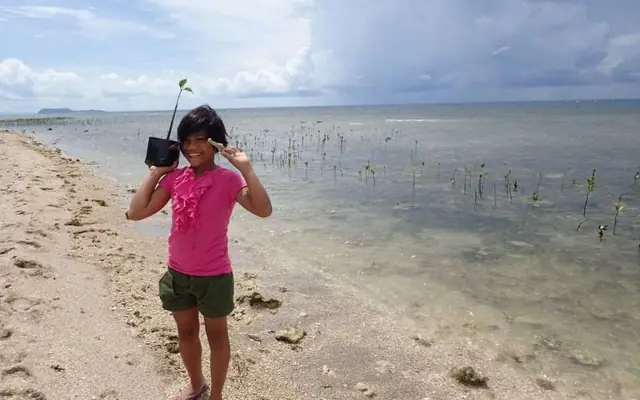
We host school groups at our base in Zamboanguita, Negros Oriental, for diving or snorkelling, beach clean-ups and tree planting alongside our conservation team. Every visit follows our child protection policy.