
How Volunteer Funded Conservation Can Work: Lessons from MCP
Time has flown by. It feels like only yesterday that Marine Conservation Philippines opened its doors, and already we have achieved a fair bit. We have had our share of successes, but have certainly also made our share of mistakes. As one of the founders of MCP, this feels like a good time to take a step back, share some of our experiences of running a volunteer-based conservation organisation, and highlight some of the challenges and opportunities we face in the future.
How Volunteers Support Marine Conservation
Marine Conservation Philippines is a volunteer-based conservation organisation. Although we have successfully applied for and secured some grants, and have received minor donations, by and large we rely on volunteers for both funding and labour.
Volunteers who join our project not only help us remain operational through their financial contribution via the volunteer fee; they also provide much of the capacity that allows us to do the work we want to do. In a very real sense, the money they contribute fuels our cars, paints our walls, pays our staff, fills our tanks, feeds everyone on base, replaces worn-out equipment and allows us to expand our operations.
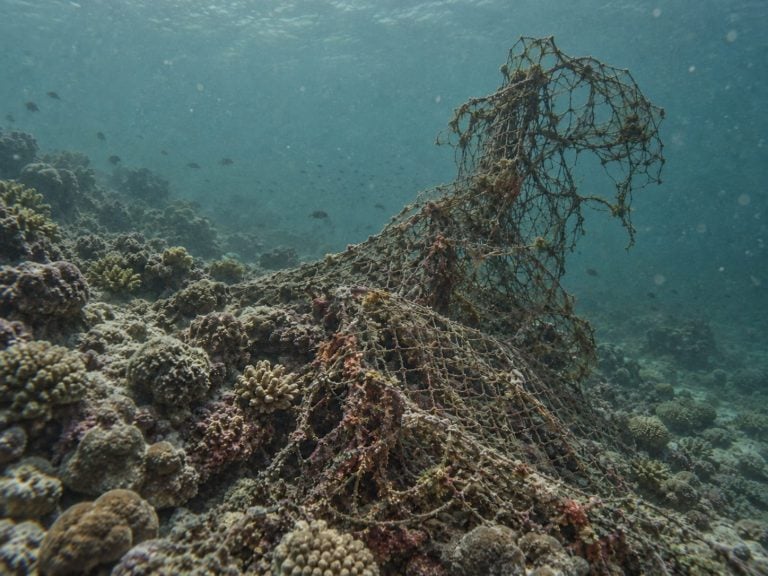
Through their participation, volunteers help us gather data, plant mangroves, teach in the community, clean up marine debris, remove ghost nets and undertake many other activities requiring substantial amounts of time and manpower.
If it sounds as though I am spelling it out, that is because I am: we could not do what we do without volunteers. Even if we had unrestricted funding, we would still need people willing to contribute their time and effort to the work.
The Opportunities and Challenges of a Volunteer Workforce
Operating with volunteer funding and a volunteer workforce gives us some unusual opportunities. Researchers frequently work within tight budgets and with limited time and manpower. Volunteer participation gives us the potential to collect datasets at a scale that would otherwise be difficult to achieve, provided that training, supervision and quality control remain rigorous.
A major challenge in marine science is collecting sufficient data. Volunteers give us the potential to gather datasets at a scale that would otherwise be difficult to achieve, provided that training, supervision and quality control remain rigorous.
On the other hand, researchers and academic institutions are often understandably cautious about collaborating with volunteer-funded organisations operating near the boundary between conservation and ecotourism.
This is a valid concern. Some projects perceived to be non-profits or NGOs are, in fact, commercial enterprises. Some recruit volunteers for placements too short for the work involved, provide inadequate training or supervision, or involve people in activities with little genuine conservation value.
In the worst cases, organisations may even create or support the very problems they claim to solve. Cambodian orphanage tourism, captive big-cat volunteering and some elephant-petting attractions are familiar examples.
Because MCP is volunteer-based, we risk being grouped together with such organisations. Even when this does not directly damage our scientific credibility, it places an understandable responsibility on us to demonstrate sound methods, meaningful results and a genuine scientific backbone.
Almost two years after our launch in March 2015, I would say we are well under way, but we need to keep up the momentum, continue demonstrating our results and achievements, and remain a useful resource for universities, people’s organisations and local government units.
Why Scientific Training Takes Time
A second challenge is that new volunteers generally arrive without training in MCP’s particular methods. Most are already scuba divers, and we are fortunate that many have a background in biology or a related field. However, the majority need at least a week and a half of additional training before they can begin contributing safely and reliably to our underwater work.
We previously accepted volunteers for placements as short as four weeks. This meant that the balance between training time and productive survey time was often limited. We have therefore always encouraged volunteers to stay longer, and in 2017 we increased the minimum placement from four weeks to six.
Above all, the most important responsibility of a conservation organisation is to create positive change. There is an enormous amount to do, so the efficiency with which our efforts translate into meaningful results matters greatly. This makes the question of how best to use the time and abilities of our volunteers especially important.
Balancing Volunteer Experience and Conservation Impact
From the feedback we receive, we know that many volunteers enjoy participating in several different kinds of work during their time with MCP. This is completely understandable. If you arrive without a precise idea of how you can help, trying different activities and contributing in several ways can be very appealing.
However, this also requires us to consider the value of the time invested in training.
Does it make sense to spend two weeks training a four-week volunteer to become a safe and capable scientific diver if that person then spends part of the remaining two weeks planting mangroves, teaching in a local school or participating in beach clean-ups?
Perhaps it does in some respects. Volunteers may leave as more informed ambassadors for the underwater world, which has value in a broader global context. In terms of producing immediate conservation results, however, it may not always be the most effective use of their newly acquired skills.
Scuba diving is a specialist activity that takes significant time to learn properly. Scientific diving—even within a limited citizen-science application—requires further training and practice. Once volunteers have received substantial training for underwater survey work, it makes sense to use most of their remaining placement time applying those skills.
Specialist Work and Community Engagement
In a nutshell, we are learning that it is a balancing act between efficiency on one hand and the expectations of volunteers and local communities on the other.
What happens beneath the waves is largely invisible to non-divers. It is therefore valuable for MCP to be visible within the community and to participate in practical work on beaches, in mangroves and elsewhere along the coast. This helps us engage local stakeholders and demonstrate that we are present and willing to contribute.
Many volunteers also enjoy these activities, and that is not without importance. The continued success of Marine Conservation Philippines depends partly on giving volunteers a meaningful and rewarding experience that they are willing to recommend to others.
At the same time, we are likely to achieve the strongest scientific results by training people for specific roles and then giving them sufficient time to apply that training through our marine monitoring programme.
Investing Volunteer Fees in Local Employment
Now, almost two years into MCP’s development, evaluating where to strike that difficult balance has led us down some new and slightly unorthodox roads.
One important step has been increasing the minimum volunteer period from four weeks to six. Although volunteers still participate in a multifaceted project, we have also begun redirecting part of the volunteer fees towards paid local employment.
Local people—some of whom the local government has agreed to deputise—can provide continuing support for marine protected areas, beach cleaning, mangrove planting and other locally important activities. This creates employment opportunities, strengthens continuity and allows more of the volunteers’ limited time to be devoted to the underwater work for which they have received specialist training.
We believe this approach will allow us to achieve more: more science, more reliable monitoring data, more marine debris removed, larger areas protected and more employment opportunities created within local communities.
We hope that, when we look back in another year and a half, we will see that these changes have helped MCP expand its reach and influence. We also hope that the reasoning behind them makes sense to the volunteers who join us.
Editor’s note — July 2026
This article was originally published in January 2017, less than two years after Marine Conservation Philippines began operating. It reflects the challenges, language and organisational structure of MCP during its early development.
Much has changed since then. MCP now has a substantial permanent Filipino workforce, established partnerships with local governments and communities, and long-running marine research, education and conservation programmes. Paid local staff provide the organisation’s continuity, leadership and institutional knowledge. International volunteers support and expand that work rather than replace local employment.
The central question explored in this article nevertheless remains relevant: how can a volunteer-funded organisation balance rigorous training, meaningful conservation outcomes, community priorities and a rewarding volunteer experience?
The approach described here has continued to evolve. MCP now operates under clearly stated ethical volunteering principles, including commitments to community-led conservation, safeguarding, appropriate volunteer roles and the protection of local employment. Our scientific work is supported by structured training and supervision, long-term marine monitoring, an open-access data portal, and publicly available reports and publications.
We have retained the original article as an honest account of what MCP was learning in 2017, while making minor editorial corrections for accuracy and clarity. Readers can also explore our achievements since 2015 or view our current volunteer programmes.

Cant wait to come join the volunteer work. See you 21 August 2017. for at least 6 months.