From the Great Barrier Reef to the Bohol Sea: Coral Bleaching and the Philippines’ Climate Refugia
Between 2023 and 2025, 84% of the world’s coral reef area experienced unprecedented heat stress — what NOAA and the International Coral Reef Initiative (ICRI) declared the fourth global coral bleaching event, and by far the most extensive on record. It marks a steep climb from past events: the first recognized global bleaching event, in 1998, affected 21% of the world’s corals. That number rose to 37% in the second event (2010), then to 68% in the third (2014–2017). The 2016 wave of that third event was widely reported for its devastation of the Great Barrier Reef in Australia, where 93% of corals were bleached.
Bleaching explained in video
Coral bleaching happens mainly because of the combined effects of elevated sea temperatures and increased solar radiation, which stress corals into expelling their symbiotic algae (zooxanthellae) as a defense mechanism. The algae is what gives corals their color, so without it, coral polyps turn white — hence “bleaching.” The post-bleaching period is the most critical for corals, since they essentially starve without the energy zooxanthellae normally provide. If water conditions return to normal in time, corals can recover and take back their zooxanthellae — assuming they survive long enough to get there.Not all corals are built the same. Some species and growth forms — massive and solitary corals, for example — are more resilient to bleaching and more tolerant of environmental change, and are typically the last in an area to bleach. That said, resilience isn’t determined by coral type alone. Other factors matter too, including pollution and uncontrolled outbreaks of coral predators, most notoriously the crown-of-thorns starfish. Left unchecked, these pressures only worsen the odds for reefs that are already weakened, lowering their chances of surviving and recovering from bleaching.The Philippines has one of the most diverse reef systems in the world, with over 600 coral species — though 200 of these are classified by the IUCN as endangered or vulnerable and face the threat of disappearing entirely. Because of this, certain parts of the country have been dubbed “climate refugia” for coral reefs — areas predicted to act as refuges or protected pockets from the worst effects of climate change.
One of these climate refugia is the south of Negros Island, home to MCP. This holds true for other regions within the Bohol Sea as well: currents passing through the area bring in cooler water, resulting in fewer instances of bleaching compared to most other parts of the country. This is reflected in NOAA Coral Reef Watch’s bleaching alert projections (2024), where the Bohol Sea shows little to no heat stress. The Bohol Sea contains 184 Marine Protected Areas (MPAs), of which MCP monitors 10.

NOAA Coral Reef Watch Bleaching Alert Projection (2025)MCP’s substrate monitoring tracks corals’ health status, assessing conditions such as bleaching and mortality. We also analyze our substrate data based on the resilience of different coral growth forms, noting which are more resistant not just to bleaching but to physical damage from storms or human disturbance. It’s important to note that though these places are resilient now, we don’t know if they’ll stay that way. If current trends in sea temperature rise continue, an estimated 70–90% of the world’s reefs could be gone by 2050. Keeping a close eye on these reefs matters all the more when we consider that they might be our last stand against a warming planet.
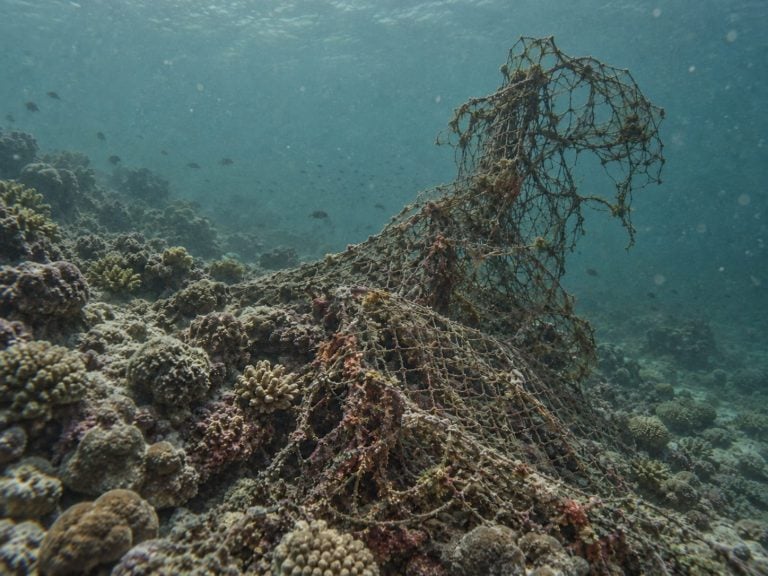
Protecting our corals from disappearing demands a holistic approach. On a larger scale, policies that reduce carbon emissions are necessary to limit global warming to 1.5°C, since exceeding this threshold would kill almost all the world’s corals. On a local scale, most of what can be done is protecting already-vulnerable reefs from other threats. This includes limiting pollution, eradicating illegal fishing practices that directly destroy corals — such as muro-ami (drive-net fishing using weighted lines to scare fish into nets, which damages reef structure) and dynamite fishing — upholding ecologically responsible tourism, and intervening when predator populations like the crown-of-thorns starfish spike. Though not much can be done instantly about rising temperatures, reducing these other threats gives reefs a better chance at recovering when bleaching does occur.
If you see a large coral colony, it likely took hundreds to even thousands of years to grow. If it doesn’t survive a bleaching event, that’s the same as losing a centennial or millennial tree. Coral reefs are an integral part of our seas and the foundation of an ecosystem that millions of people depend on for food and livelihood. Restoration practices have grown more popular, but we’re still called to protect what’s already there first — knowing that keeping our reefs colorful and vibrant also means keeping our local communities safe and healthy.