Unseen Stressors: How Microplastics Interact with Coral Reef Ecosystems
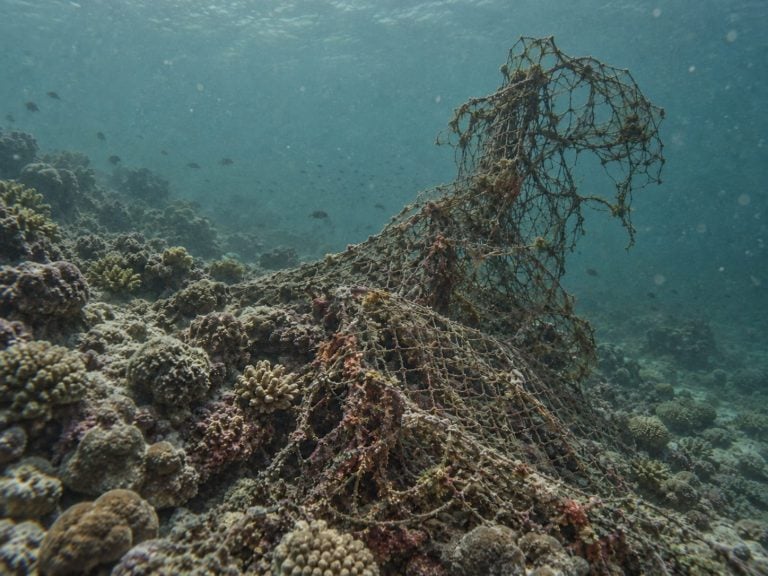
Along the coast of Zamboanguita, our dive teams regularly see the visible side of marine pollution: discarded plastic bottles, food wrappers, and fishing lines drifting across our local reefs. But beyond these obvious waste items lies a far more subtle challenge—one that is driven by larger debris breaking down into tiny particles that are often difficult, or impossible, to see during an ordinary dive.
Understanding the Threat of Microplastics
Unlike organic waste, most conventional plastics do not readily biodegrade. Instead, exposure to sunlight, heat, and physical wave action causes larger objects to fragment into progressively smaller pieces over time.
Scientists classify these fragments by size: Microplastics are plastic particles smaller than 5 mm in diameter, and nanoplastics are an even smaller category for which definitions still vary, but which is commonly taken to mean particles smaller than 1 micrometre (1 μm). These particles are, of course, completely invisible to the naked eye.
Counting every plastic particle in the ocean is impossible. However, a 2023 modelling study estimated that approximately 82–358 trillion plastic particles—primarily microplastics—were afloat in the ocean’s surface layer in 2019 (Eriksen et al., 2023). Furthermore, environmental assessments by UNEP (2021) estimate that around 11 million metric tonnes of plastic waste enter the world’s oceans every year.
How Corals Interact with Microplastics
As corals are fixed in place, they depend on surrounding water movement for gas exchange and access to suspended food. Many reef-building corals capture zooplankton and suspended organic material using tentacles and mucus coats, while microscopic cilia—tiny hair-like structures—help transport particles across their surfaces. With certain microplastics falling within the same size range as natural prey, or acquiring a biological coating of bacteria and algae, corals may accidentally capture and ingest them.
Laboratory studies have revealed two primary ways corals interact with these particles:
Ingestion and Clearance: Laboratory studies have shown that several coral species can ingest microplastic particles. While some coral polyps manage to regurgitate or otherwise expel them using mucus, others retain them temporarily inside their digestive cavities (Pantos, 2022; Isa et al., 2025). This is already happening on local reefs: the first field study on wild Philippine corals found up to five microplastic particles embedded directly within the tissues of key reef-building species such as Acropora and Porites (Castillo et al., 2026).
Skeletal Overgrowth: Certain coral species can overgrow particles that settle on their tissue, slowly incorporating the plastic into their calcium carbonate skeletons (Reichert et al., 2022). Researchers are still studying how frequently this occurs on natural reefs and what long-term structural effects it may have.
How Plastic Impacts Coral Health
In controlled laboratory experiments, high concentrations of microplastics and nanoplastics have been shown to induce physiological stress in corals. Observed impacts include:
Energetic Costs and Feeding Interference: Producing mucus and removing ingested particles may impose additional energetic costs and interfere with normal feeding and nutrient intake (Pantos, 2022).
Tissue Damage and Pathogen Risk: Microplastics can irritate or scrape delicate coral tissue. Additionally, because plastic particles can carry chemical additives or surface microbes, they may potentially expose corals to unwanted bacteria or contaminants (Pantos, 2022; Isa et al., 2025).
Stress Responses: In one laboratory study, exposure to polystyrene nanoplastics impaired the photosynthetic performance of coral symbionts and promoted bleaching responses (Marangoni et al., 2022).
It is important to note that these responses vary widely depending on the coral species, particle shape, polymer type, and exposure level. Microplastics are therefore better understood as a potential chronic stressor than as a standalone cause of reef destruction. They may add to the cumulative pressures experienced by corals, although their significance under natural reef conditions remains uncertain.

From Reef to Plate: Moving Up the Food Web
When microplastics enter reef organisms, they do not necessarily stay there. Research has demonstrated trophic transfer—the movement of particles from prey to predator as smaller invertebrates and fish are consumed by larger marine species. In a recent study on Philippine reefs, nearly 84% of sampled reef fish—including local parrotfish and rabbitfish—had microplastics in their digestive tracts (Castillo et al., 2026). However, this does not necessarily mean that microplastics consistently accumulate at higher concentrations at each successive level of the food web (Pantos, 2022).
As seafood is an important protein source for coastal communities across Negros Oriental and the wider Philippines, the movement of microplastics through marine food webs is not just an ocean issue—it is a human one. Humans are exposed to microplastics through food, water, and air, and recent studies have detected plastic particles in human tissues, including the liver, kidneys, and brain (Nihart et al., 2025).
These discoveries do not establish where the particles originated or prove that they cause particular diseases. The World Health Organization’s most comprehensive assessment, published in 2022 and based on evidence available up to 2021, identified major uncertainties concerning exposure and health effects. More recent tissue studies have made the need for further investigation still more pressing, but they do not by themselves demonstrate causation.
How We Protect Our Coast
Addressing plastic pollution ultimately requires global changes in production and waste systems. But right here in Zamboanguita, hands-on local effort is making a direct impact. Here at MCP, we conduct fortnightly beach and dive cleanups while also recording marine trash data during our routine reef monitoring as part of our Predation survey methodology. Meanwhile, our partner organisation, ProOcean, carries out daily coastal cleanups across southern Negros Oriental—removing 400–600 kg of trash every single day. We also currently have someone on our academic internship programme analysing long-term pollution trends across all of our dive sites as part of their studies.
While cleanups cannot filter out microplastics already scattered across the seabed, their real power lies in prevention. By removing larger debris before it fragments, we protect marine life from entanglement, gather critical conservation data, and prevent additional plastic from being carried, recirculated, and broken down within the marine environment. This is clear on local reefs, where recent chemical analysis showed a dominance of polypropylene and polyethylene—the exact polymers used in local fishing gear and single-use packaging (Castillo et al., 2026).
The Power of ‘One Less Bottle’
When standing on a beach littered with debris, looking at a statistic such as ‘82–358 trillion plastic particles’ can feel completely overwhelming. It is easy to wonder whether a single person’s effort even matters. But remember how microplastics are created.
Consider just one discarded plastic bottle. Left on the shore, sunlight and waves will eventually fragment it into numerous smaller particles that are far more difficult to recover and more readily encountered by marine organisms. By joining a beach cleanup, supporting local conservation efforts, or reducing your own plastic footprint, you are not simply removing one bottle—you are preventing an avoidable source of entanglement, ingestion, and future fragmentation.
Every piece removed prevents an avoidable source of harm to marine life. Through daily choices, community initiatives, science, and sustained local action, we can safeguard our waters and build a healthier, more resilient ocean for tomorrow.
References
Castillo, A. J. A., Hechanova, R. F., Inocente-Segovia, S. A., Reble, D. M., Paragoso, A. D., Banda, M. H., & Capangpangan, R. Y. (2026). ‘Microplastics invading corals: first scientific evidence from the Philippine Coral Triangle’. Ocean and Coastal Research, 74, p. e26010.
Eriksen, M., Cowger, W., Erdle, L. M., Coffin, S., Villarrubia-Gómez, P., Moore, C. J., Carpenter, E. J., Day, R. H., Thiel, M., & Wilcox, C. (2023). ‘A growing plastic smog, now estimated to be over 170 trillion plastic particles afloat in the world’s oceans—urgent solutions required’. PLOS ONE, 18(3), e0281596.
Isa, V., Saliu, F., Becchi, A., Spadaccino, G., Quinto, M., Veronelli, M., Lasagni, M., Galli, P., & Lavorano, S. (2025). ‘Impacts of microplastics on reef-building corals: disentangling the contribution of the chain scission products released by weathering’. Science of the Total Environment, 975, 179239.
Marangoni, L. F. B., et al. (2022). ‘Polystyrene nanoplastics impair the photosynthetic capacities of Symbiodiniaceae and promote coral bleaching’. Science of the Total Environment, 815, 152136.
Nihart, A. J., et al. (2025). ‘Bioaccumulation of microplastics in decedent human brains’. Nature Medicine, 31(4), pp. 1114–1119.
Pantos, O. (2022). ‘Microplastics: impacts on corals and other reef organisms’. Emerging Topics in Life Sciences, 6(1), pp. 81–93.
Reichert, J., Arnold, A. L., Hammer, N., Miller, I. B., Rades, M., Schubert, P., Ziegler, M., & Wilke, T. (2022). ‘Reef-building corals act as long-term sink for microplastic’. Global Change Biology, 28(1), pp. 33–45.
United Nations Environment Programme (2021). From Pollution to Solution: A Global Assessment of Marine Litter and Plastic Pollution. UNEP, Nairobi.
World Health Organization (2022). Dietary and Inhalation Exposure to Nano- and Microplastic Particles and Potential Implications for Human Health. WHO, Geneva.
Editor’s note — July 2026
This article was originally published in 2016. As we know many students use our old articles as references, the article has been appropriately updated to reflect developments in the past decade. All original references have been replaced with the latest information, and all numbers now reflect the latest science.
If you are interested in doing something yourself, consider checking out our beach clean up toolkit, where you can find the resources to organize a clean up yourself.