Apo Island Jetty Project
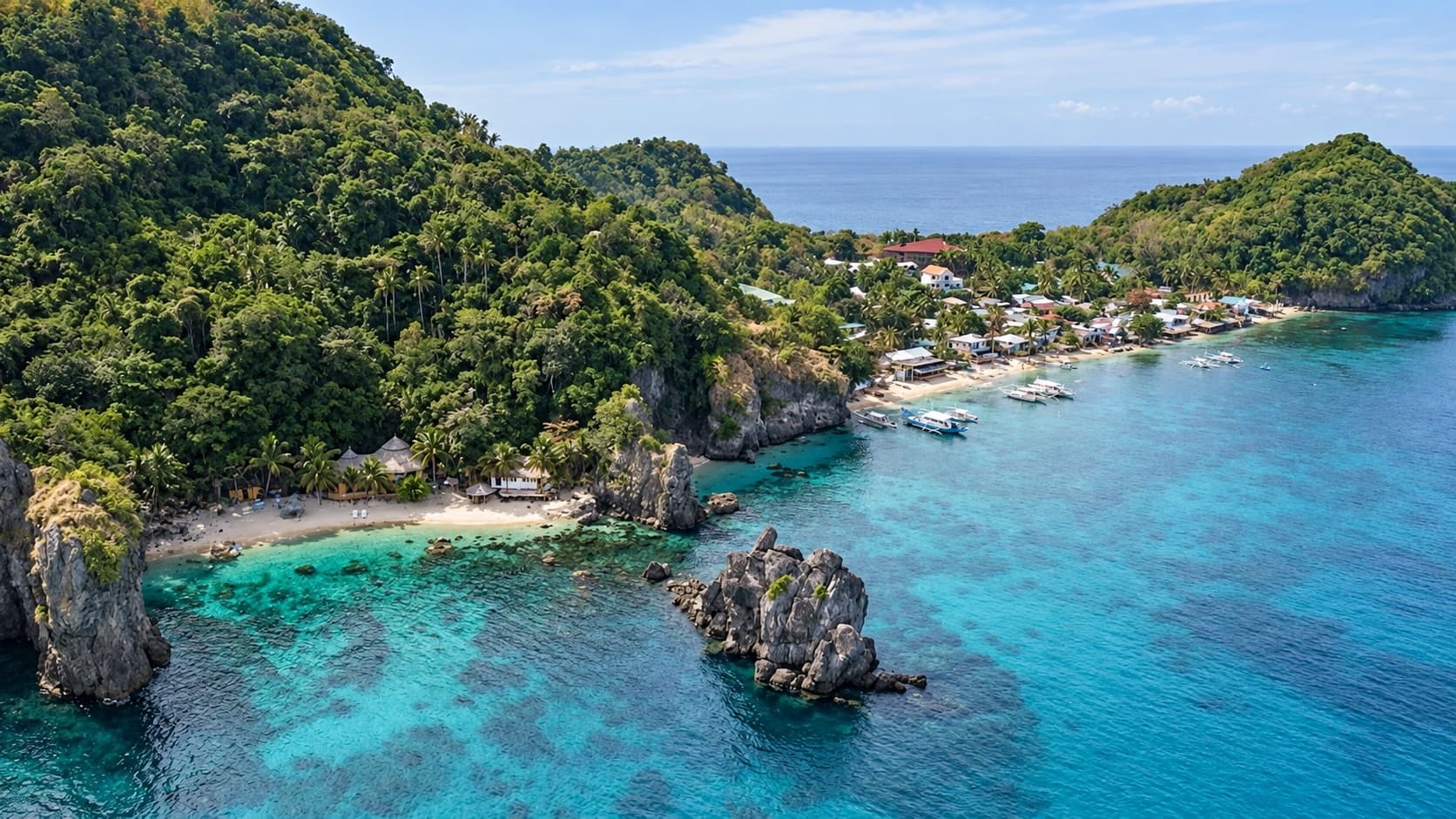
If you’ve ever visited the island of Negros, you’ve probably heard about Apo Island, a beautiful secluded paradise covering 74 hectares. The island is famous for its exceptional scuba diving and snorkeling with turtles. Nowadays, around 1000 people live on the island, mainly depending on tourism and fishing.
In late 2022, the local government (Dauin LGU) and the Barangay in Apo Island proposed building a jetty for the island. Apo Island has been a protected area on both land and sea since 1994, when Presidential Proclamation No. 438 declared it a National Integrated Protected Areas System site. Within that, some areas are strict “no-take” zones, like the Marine Sanctuary on the southeast side of the island, while other areas have more flexible rules to support sustainable living and use. The Marine Sanctuary itself predates that formal protection: the site was selected in 1982 by the local community, in collaboration with Silliman University and the late Prof. Dr. Angel Alcala, though it took three more years of dialogue before every family on the island had agreed to observe it, making it locally binding by 1985.

Living on a small island means that almost everything, including fuel, food, drinking water, and other products, needs to be transported by sea. For Apo Island, this is done using pump boats. Given the challenges of boarding a pump boat from the shore, especially on windy days while carrying heavy water containers, having a jetty would benefit residents, fishers, and visiting divers alike. The proposed location for the jetty was discussed during a meeting of the Protected Area Management Board (PAMB), which regulates the Apo Island Protected Landscape and Seascape (AIPLS). However, two members of the board, Prof. Dr. Aileen Maypa and Prof. Dr. Janet Estacion, raised concerns about the chosen location. It happened to be the same beach where the Marine Sanctuary is situated.

The Marine Sanctuary is the largest “no-take” zone in AIPLS and has been the subject of numerous scientific studies by institutions like Silliman University. It plays a crucial role in supporting the surrounding areas by helping fish populations thrive both inside and outside its boundaries, which benefits the locals who depend on fishing. The reef inside the Sanctuary was also severely damaged by Typhoon Sendong in 2011 and Typhoon Pablo in 2012, and recovery has been slow: monitoring from 2013 to 2020 recorded hard coral cover at only around 20%, with loose rubble still covering roughly 60% of the site (Reboton et al., 2020, AIPLS Coral Rehabilitation and Fish Recovery Project 2013-2020, submitted to DENR AIPLS-PAMB).
To address the concerns raised, DENR Region 7 formed a Technical Working Group under Regional Special Order 2023-106, drawing on Silliman University, the Institute for Marine Research, and MCP. The Workgroup conducted a scientific literature review addressing each of Dr. Maypa and Dr. Estacion’s concerns in turn: sedimentation from construction, shading of coral by the pontoon and boardwalk, oil-spill risk given the site’s currents, noise pollution during construction and operation, and disruption to the fish spillover between the Sanctuary and the island’s main fishing grounds. Its findings were submitted in May 2023 and validated all of these concerns as scientifically well-founded; the report itself made no recommendation in favor of the jetty proceeding. At the meeting in Dumaguete where the findings were presented, alternative locations were suggested, along with a redesign using floating pontoons and natural rocky flats at the coast, rather than the original plan of fixed pillars driven into the seabed.
We were happy to be part of the Workgroup and provide advice, using science to achieve balanced environmental protection and meet the basic needs of the islanders. It was an honor to witness the management of the Marine Protected Area (MPA) and the collaborative process between institutions such as Silliman University, DENR, and the local government units. Traditionally, international volunteers at MCP arrange for a day of fun diving at Apo Island every month, once all of our goals for the month have been met. Consider joining us as a volunteer if you’d like to see for yourself.
What happened next? — 2026 update
Since this was published, the record is worth setting straight. The Workgroup’s report, above, validated every one of Dr. Maypa and Dr. Estacion’s environmental concerns and made no recommendation in favor of the jetty. The alternative location and floating-pontoon design discussed at the time were not adopted either. Proponents of the project instead cited the Workgroup’s involvement as though it had endorsed going ahead at the original site. Construction proceeded, and by mid-2024 the jetty was reported around 80% complete. In September 2024, the historic Apo Island Chapel was demolished to make way for it. In 2025, DENR’s Biodiversity Management Bureau reversed the project’s environmental clearance with a cease-and-desist order, citing continuous and irreparable damage to the coastal ecosystem, and recommended restoring the chapel to its original site. The PAMB has since funded a new feasibility study into alternative berthing options, including a movable floating dock or helix-pin anchoring, essentially returning to the kind of alternative proposed back in 2023. Since 2026, MCP has held a permanent seat on the PAMB, which should give scientific findings like this one more weight in decisions going forward.