International Coastal Clean Up Day 2018
As part of over 100 countries tackling marine trash for International Coastal Clean Up Day, MCP spent a Saturday doing our part with local communities in four locations along the southern coast of Negros Oriental. Typhoon Mangkhut made landfall in the Philippines on the exact weekend Coastal Clean Up Day fell that year, delaying the event nationwide, not just for us. Our volunteers and staff were keen to make a difference a week later than originally planned. Four teams of MCPeople were deployed along the coast: at the Science High School in Zamboanguita, at two of our dive sites, Basak and Guinsuan, and in the city of Dumaguete.
At Basak, we were joined by 25 locals who were highly motivated, and had already cleaned half the beach by the time MCP arrived at 7am. It was clear they cared about their coastline. An impressive 240 kilos of trash was collected, with sorting handled by teenagers and children, each assigned a category and speeding round collecting metal caps, plastic caps, and straws. It was a good, family-oriented day, and all the parents turned up to watch the sorting.
In Guinsuan, a group of children from the local school had already collected all the trash, so we helped sort it together by the guard house for the Marine Protected Area. High motivation meant the 60 kilos collected was sorted quickly. The purple ube ice cream, a halo-halo staple, was enjoyed as an after-clean-up treat.
In Dumaguete, we were helped by students from St. Paul University Dumaguete and Perpetual Help Community Cooperative, Inc. (PHCCI). Together, they cleaned three local beaches: Piapi, Looc, and Bantayan. Over the course of the morning, they collected a large amount of trash and sorted 150 kilos of it, amounting to 7,685 pieces. Only around a quarter of the trash was sorted, so the total collected was closer to 600 kilos. Among it were syringes, broken glass, human waste, and a long-dead rat. Reactions from locals varied: some were shocked by the trash but had other priorities, some felt cleaning wasn’t their job given the municipal cleaners, and others were indifferent. Even so, it was a valuable opportunity for the children and students to see the scale of the waste problem firsthand. The team felt they had done good work and made a real dent in the problem.
At the Zamboanguita Science High School, we had Sarah, Cecille, Wanying, and 10 students from the school. With the heavy rain, we expected few local kids to turn out, but 45 showed up. The kids, ranging from 9th to 12th grade, were split into trash category groups and cleaned the beach near the school. The pre-clean motivational speech went a little too well, and they sped down the beach grabbing every big piece in sight. After a reminder to slow down and catch the smaller pieces too, everyone did an excellent job, helping each other sort items into the right categories despite the downpour. In 30 minutes, over 100 kilos of trash was collected. Back at the school, everyone huddled into a small shelter and sorted it all out, a little chaotic but a lot of fun. A 12th grader was responsible for recording the numbers and weights. Once the sorting was done, the kids had to leave quickly for a birthday party, a sign of just how dedicated they’d been to the clean-up.
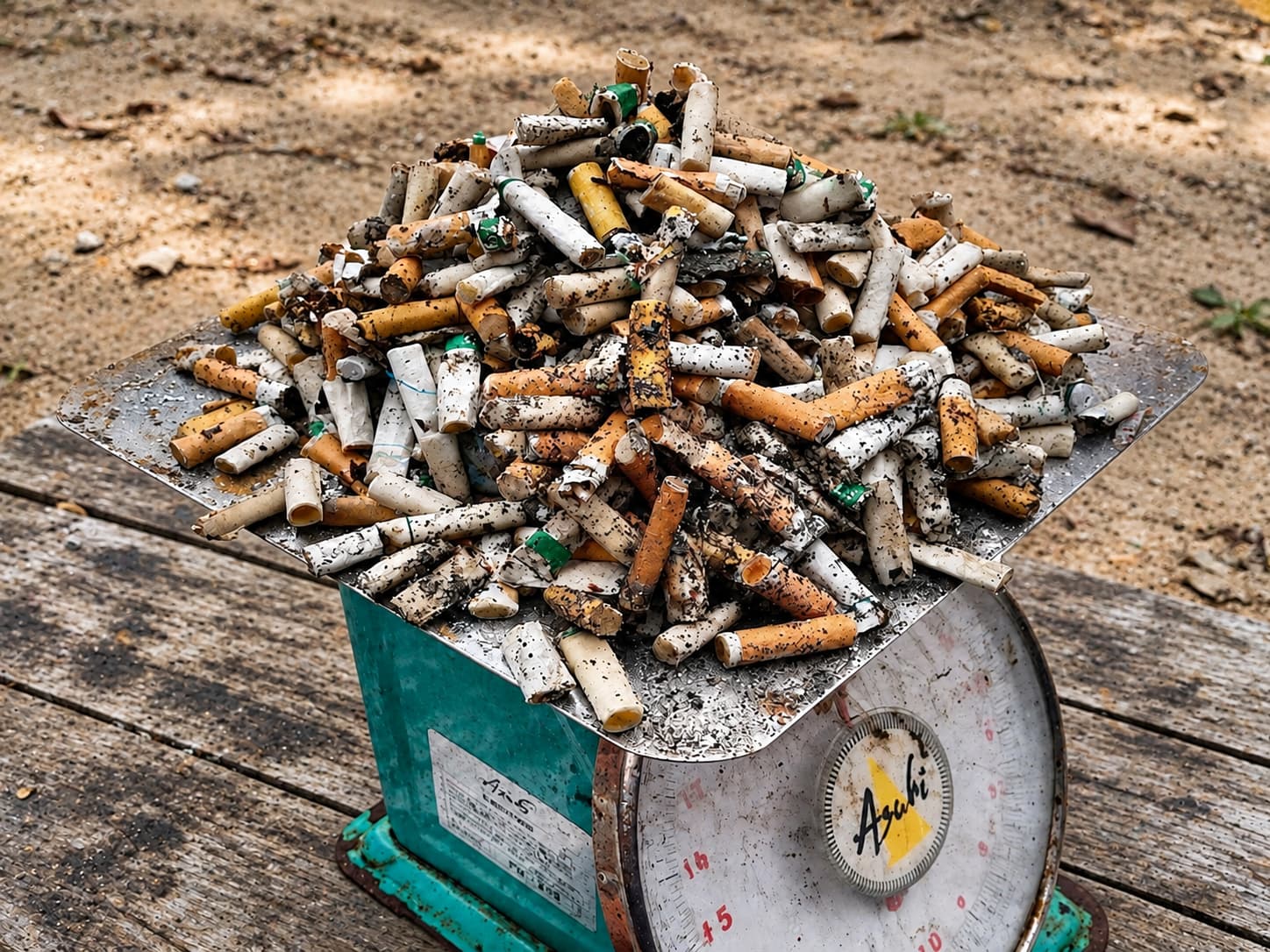
All the trash was sorted using the Ocean Conservancy format, and the data was uploaded through the Ocean Conservancy app to contribute to their global beach clean-up database. The Ocean Conservancy runs a “Trash Free Seas” program, mobilising the annual International Coastal Cleanup, researching and sharing ocean trash data, and lobbying policymakers and businesses to reduce marine trash pollution. The Cleanup itself began in 1986, when Ocean Conservancy colleagues Linda Maraniss and Kathy O’Hara organised the first one in Texas: about 2,800 volunteers collected roughly 112 tonnes of trash from 196km of coastline in a single day, the same scrappy, one-Saturday model MCP was running 32 years later on the other side of the world. That year, as in every year of the Cleanup’s history up to that point, the single most common item found worldwide was cigarette butts, quite possibly why they’re what stares back at you from this post’s own header image; food wrappers wouldn’t overtake them until 2019.
In total, MCP and the community groups we worked with collected close to a tonne of garbage from beaches in a single day, up from around 600 kilos the year before. Our efforts to track marine trash have only grown since: today, cleanup and survey data feeds into a broader picture of where the trash on our reefs comes from.