Surveying for windowpane oysters
I came to Marine Conservation Philippines (MCP) as a Dive Master in Training (DMT) in 2016. I wanted to complete my Divemaster course at a marine conservation centre rather than a recreational dive shop, and I wasn’t disappointed. I found a home at MCP and grew into a safe, sane, responsible diver under the mentorship of the instructors and staff. I wasn’t ready to leave when my time was up, but life happened, and I had to go.
Six months later, I was welcomed back as an intern. When I was asked to take on the Siit Bay Windowpane Oyster Project, I said yes, without having any idea what I was getting myself into.
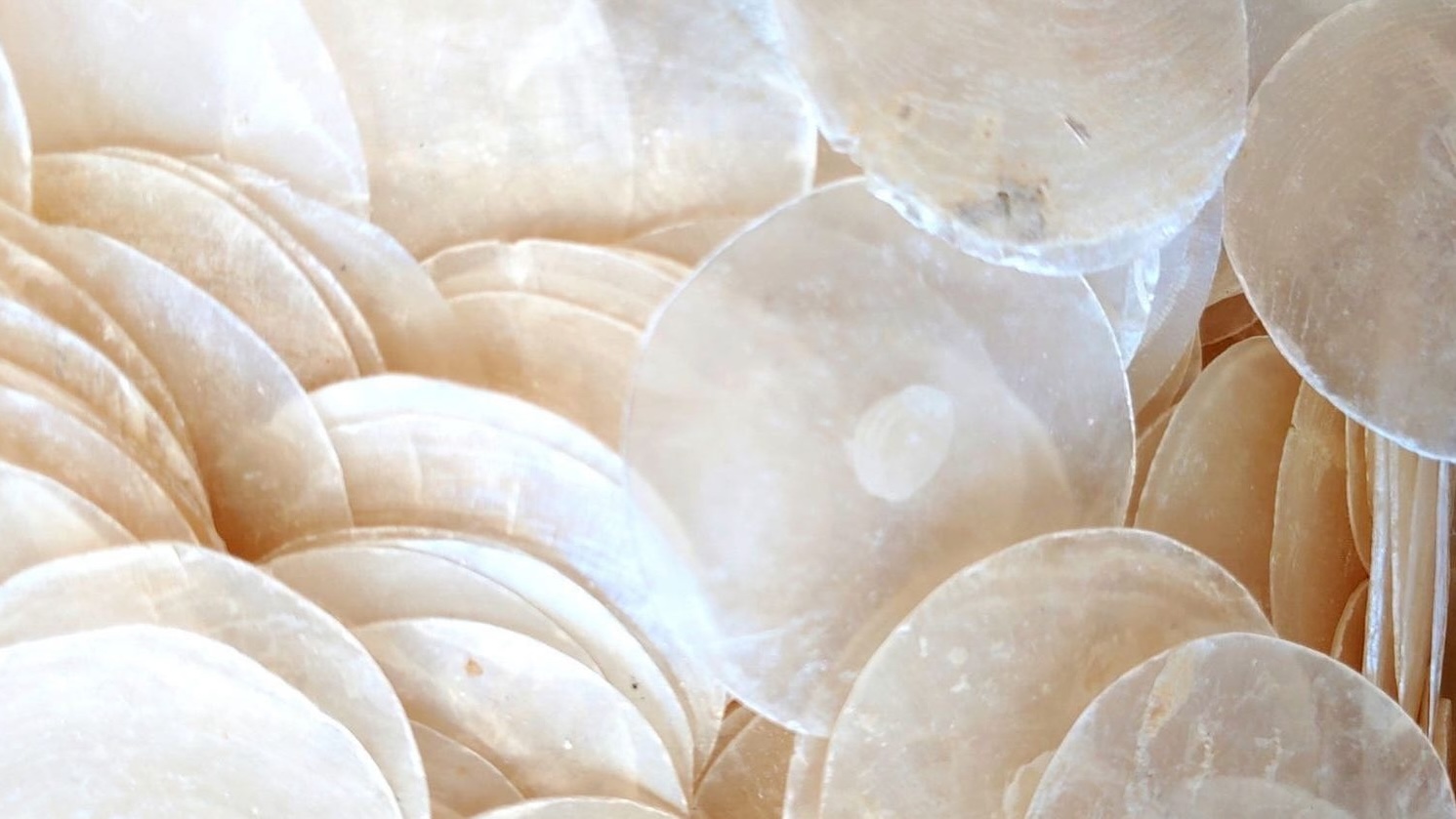
In a nutshell, MCP had been approached by the Local Government Unit and the Environment and Natural Resources Division of Siaton for help locating the best area in Siit Bay to establish a marine protected area for windowpane oysters. If you’ve never heard of windowpane oysters, you’re not alone. I did some research and here’s what I found. The windowpane oyster, Placuna placenta, locally known as Capiz, is an edible marine bivalve mollusc with thin, translucent, shiny, mica-like shells. It is usually found on sandy-mud bottoms along the mangrove coastlines of Southeast and South Asian countries (Yonge, 1977).
My job was to lead and carry out surveys to estimate the population density of windowpane oysters, along the coasts of mangrove forests. It sounds scientific, maybe even a little dry, but in reality it was a unique experience, made harder by close to zero visibility. I used to think “bad visibility” meant seeing a metre or two ahead. Diving in the murky water of Siit Bay taught me otherwise: I was often inches from the bottom without being able to see it, and the only way to check my compass or dive computer was to hold it right in front of my mask, that’s bad viz. It was challenging, but a genuinely valuable experience to work in such extreme conditions, and after three weeks of diving in the mud, I was ready to be back on the reef.
So, why protect the oysters? Because the ocean ecosystems that support them are under serious pressure. Windowpane oysters were once so abundant along the Philippine coastline that the shell itself, known locally as Capiz, takes its name from Capiz province in the Western Visayas region of the central Philippines, where the species was historically most plentiful.
Today, they are under threat from exploitation. Their shells are exported worldwide as raw material for handicrafts, including window panes, chandeliers, wind chimes and jewellery. Windowpane shells previously had a significant economic impact in the Philippines, ranking fifth among major fishery exports and generating US$36 million in shell craft exports between 1986 and 1991 (Philippine Fisheries Profile, 1986-1991). During those years, raw shells sold for as little as PHP 5 to PHP 12 per kilogram, when US$1 was equivalent to roughly PHP 27 (Gallardo, Siar & Encena II, 1995), a staggering number of oysters harvested just to make chandeliers. High demand pushed fishers toward destructive harvesting methods, including dredging, trawling and dynamite fishing, to collect as many oysters as possible. These methods depleted oyster populations and damaged the seagrass beds and coral reefs around them. This is why establishing MPAs and windowpane oyster sanctuaries is vital to the survival of remaining populations.
The Siit Bay surveys were completed in three weeks. The data we collected matched Hornell’s (1909) earlier finding that windowpane oysters prefer sandy-mud bottoms. Since fertilisation in this species happens externally in open water, denser populations are generally understood to reproduce more successfully; Madrones-Ladja (2002) offers related findings on the species’ reproductive biology. Based on this, I concluded that the best location for an MPA was along the mangrove forests and seagrass beds where oysters were found in the highest numbers. Establishing an MPA and windowpane oyster sanctuary here would give juvenile oysters a safe place to grow and sexually mature adults a safe place to spawn, while fishers would still benefit from a sustainable supply through spillover from outside the protected area.
Windowpane oysters aren’t the only species at risk. Mangroves, seagrass and coral reefs around the world are under serious stress, and many are disappearing. That’s why, at MCP, we work with local communities to protect our home.
The completed report can be found here.
References
Gallardo, W. G., Siar, S. V. & Encena II, V. (1995). Exploitation of the window-pane shell Placuna placenta in the Philippines. Biological Conservation, 73(1), 33-38. https://doi.org/10.1016/0006-3207(95)90057-8
Hornell, J. (1909). Report upon the anatomy of Placuna placenta, with notes upon its distribution and economic uses. In Report to the Government of Baroda on the Marine Zoology of Okhamandal in Kattiawar. Williams and Norgate, London, pp. 43-97. https://archive.org/details/reporttogovernme01horn/page/43/
Madrones-Ladja, J. A. (2002). Salinity effect on the embryonic development, larval growth and survival at metamorphosis of Placuna placenta Linnaeus (1758). Aquaculture, 214(1-4), 411-418. https://doi.org/10.1016/S0044-8486(02)00401-5
Philippine Fisheries Profile (1986-1991). Bureau of Fisheries and Aquatic Resources, Manila.
Yonge, C. M. (1977). Form and evolution in the Anomiacea (Mollusca: Bivalvia) – Pododesmus, Anomia, Patro, Enigmonia (Anomiidae); Placunanomia, Placuna (Placunidae, Fam. Nov.). Philosophical Transactions of the Royal Society of London B, 276(950), 453-523. https://doi.org/10.1098/rstb.1977.0005