Baseline Survey Complete: The Story Behind MCP’s Long-Term Fish Monitoring Programme
Editor’s note — July 2026
This article originally documented the completion of Marine Conservation Philippines’ foundational fish baseline survey in 2016. The 75 indicator fish species and groups selected during this 13-month study period formed the backbone of our fish monitoring protocol here in Negros Oriental. Since then our methodology has evolved, and you can find documentation on our latest monitoring protocols under volunteer downloads as well as various learning assets, such as quizzes etc..
After 13 months of fieldwork, thousands of surveyor hours, and the documentation of 324 species across 18 target fish groups, we officially completed our fish baseline survey!
Admittedly, we could have spent another few months adding more obscure families to the list. However, in conservation science, you eventually have to draw a line in the sand. Our initially ambitious goal of surveying every fish family was refined into a more practical objective: focusing on the key ecologically and economically important families that would form the basis of our long-term monitoring protocol.
Field Methodology and the Learning Curve
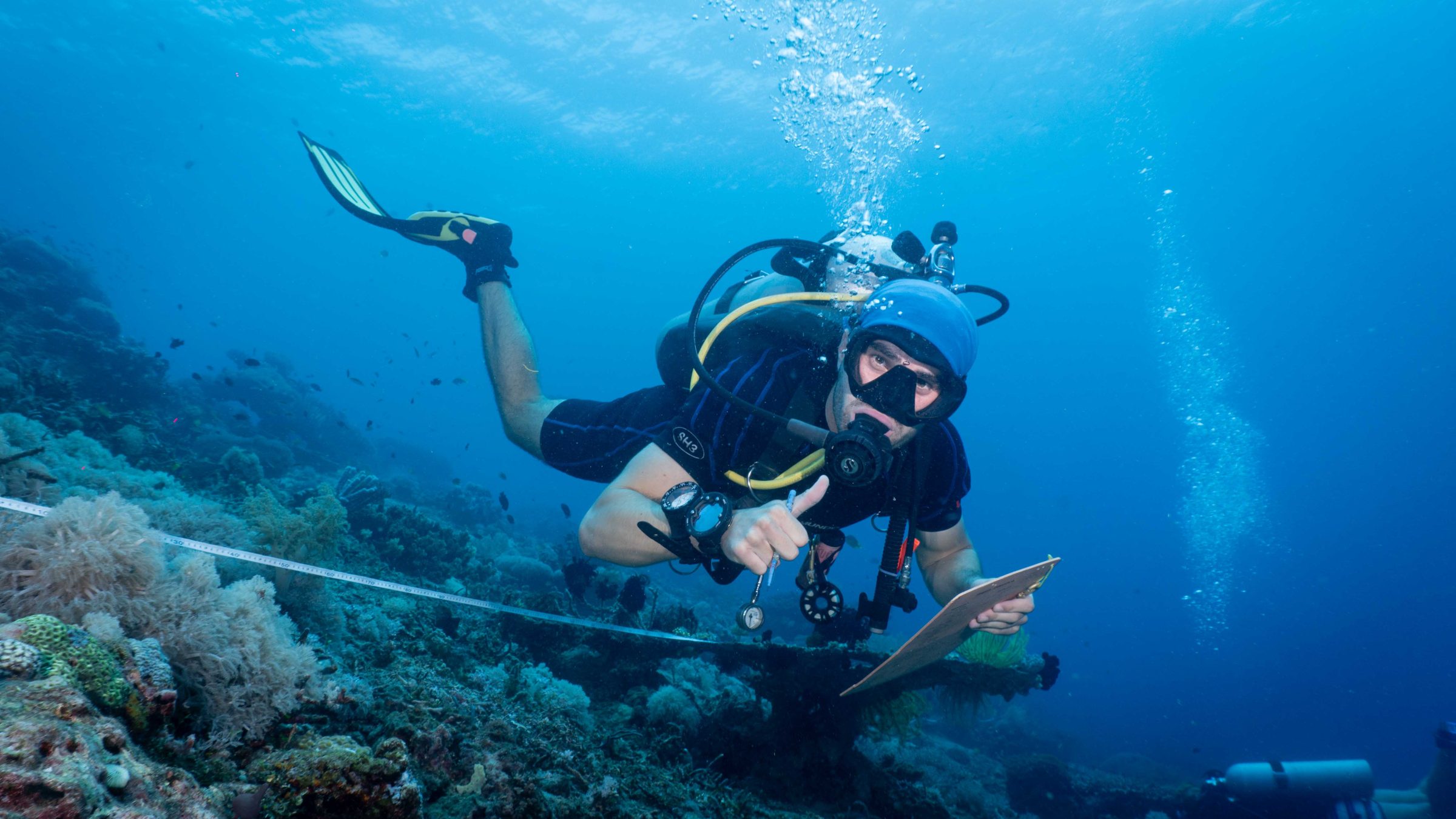
Establishing a robust marine baseline involves training dozens of volunteer divers to identify complex fish species in real time during surveys. As such, we structured our survey strategy to build surveyor capacity gradually over time:
Phased ID Training: We began with distinctive, easily recognisable groups like butterflyfish (Chaetodontidae) and angelfish (Pomacanthidae) before progressing to more variable families.
Growth Stages and Colour Morphs: Parrotfish presented the biggest hurdle for our survey teams. Individuals look entirely different across juvenile, initial, and terminal phases, meaning volunteers had to learn two or three distinct colour patterns for a single species—often whilst getting only a brief glimpse as the fish swam past.
Targeted Photographic Surveys: For massive families like wrasses (Labridae), we deployed teams equipped with underwater cameras to photograph every unknown individual across our dive sites, cross-referencing findings against regional field guides and FishBase.
The more we surveyed, the more the numbers grew. We were almost 60 surveys into the butterflyfish dataset when long-term volunteer Terri spotted a Saddled Butterflyfish (Chaetodon ephippium) within Andulay Marine Protected Area (MPA)—a species we hadn’t previously logged. Similarly, we expected to record around 70 wrasse species and ended up documenting a total of 84!
Surveyed Families Overview
Over the 13-month survey period, our teams systematically monitored 18 target fish groups across reefs within three municipalities (Zamboanguita, Siaton and Dauin):
| Ecological Role | Target Fish Groups | Field ID Challenge Level |
|---|---|---|
| Corallivores and Sponge Feeders | Angelfish (Pomacanthidae) Butterflyfish (Chaetodontidae) | Introductory (Distinctive, easily recognisable patterns) |
| Invertebrate Feeders | Boxfish (Ostraciidae) Filefish (Monacanthidae) Porcupinefish (Diodontidae) Pufferfish (Tetraodontidae) Tobies (Canthigasterinae) Triggerfish (Balistidae) | Moderate (Distinct body shapes, site-attached) |
| Carnivorous Fishery Targets | Coral breams (Nemipteridae) Goatfish (Mullidae) Groupers (Serranidae) Snappers (Lutjanidae) Sweetlips (Haemulidae) | Moderate (Cryptic behaviour and subtle marking distinctions; key commercial species) |
| Herbivores and Grazers | Parrotfish (Scaridae) Rabbitfish (Siganidae) Surgeonfish (Acanthuridae) | High (Complex growth phases and colour changes; also key commercial species) |
| Planktivores and Small Carnivores | Fusiliers (Caesionidae) Wrasses (Labridae) | Very High (High species richness and variable colour patterns) |
Life on the Transect Line
Spending hundreds of hours underwater with a very specific scientific objective inevitably leads to team rituals, dive slang, and local legends.
Certain species became quick volunteer favourites, earning unofficial nicknames that stuck for the rest of the survey period. For reasons now lost to time, the Black-saddled Toby (Canthigaster valentini) was universally renamed ‘Party Toby’. Meanwhile, a large mangrove red snapper (Lutjanus argentimaculatus) that habitually hid under the exact same ledge at Lutoban Pier was affectionately named ‘Bert’.
From 324 Species to 75 Fish Indicators
Collecting raw fish diversity data is only the first step; turning it into an actionable monitoring tool is where the real science happens.
Using the Rapid Visual Census (RVC) method across 216 surveys, our teams documented species presence across our reefs. Through extensive cross-referencing of field records against FishBase and FAO catalogues, combined with statistical analysis of species occurrence across our local dive sites, we narrowed 324 recorded species down to 75 key indicator fish species and groups. When combined with separate survey methods for substrate cover and key invertebrates, these 75 indicators completed the framework for the long-term monitoring programme that MCP uses to track reef health within Zamboanguita and surrounding municipalities.
Acknowledgements & Downloads
Collecting the data and building this framework for our first major research effort—completed just a year after MCP became fully operational—was a massive undertaking. Special thanks go to our intern Peter Jones, who undertook the colossal task of cross-referencing our species lists and the literature. This milestone belongs to every volunteer, intern, and staff member who held a slate, snapped photos, or spent long hours verifying records both above and below the surface. To every single person who contributed: thank you for making this possible!